IWK Health: Mental Health and Addictions + BetterDrea.ms
Creating a cultural framework for trauma-informed care and well-being.
Services: Graphic Design, illustration, and data visualization for print and screen
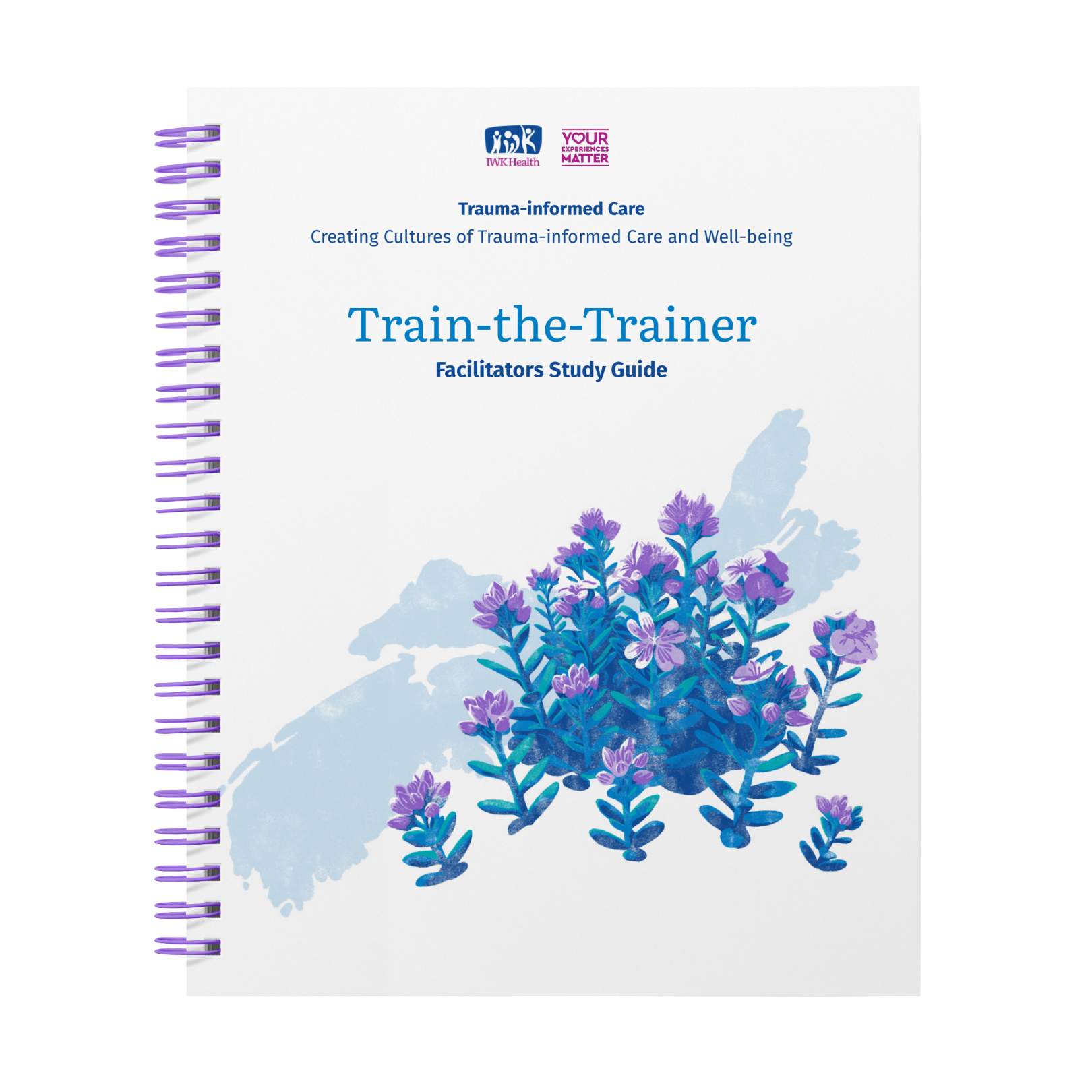
Product: Digital presentation, facilitator study guide, training manual, infographics, and illustration suite
Client
The Mental Health and Addictions Program (MHA) is one of three clinical programs at IWK Health. They treat children and youth up until their 19 birthday within a patient and family-centred context.
iwkhealth.ca →
Team
Tonya Grant
Holly Murphy
Trudy Flinn
Lindsay Chiddenton
Coleen Flynn
Colin Morrison
Maureen Brennan
Audrey Peters
Kait Todd
Melaine Keddy
Greg Dubeau
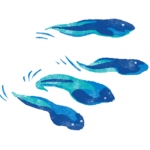
Advancing global healthcare through trauma-informed design
The IWK Health Mental Health and Addictions (→) program is a global leader in the application of Trauma-informed Care (TIC) within healthcare facilities and community environments. Through a research-based lens, the organization provides essential training and administration using educational toolkits that empower practitioners and educators to implement TIC within their own fields.
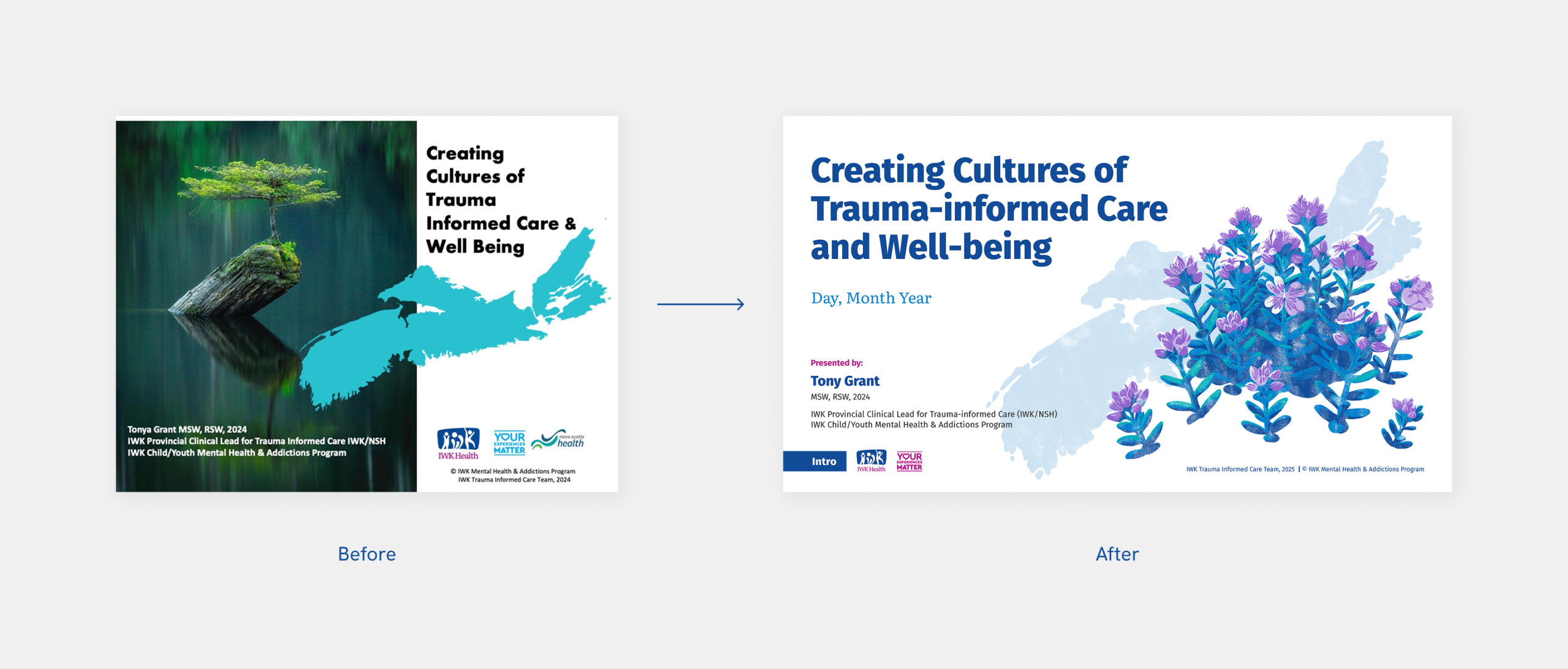
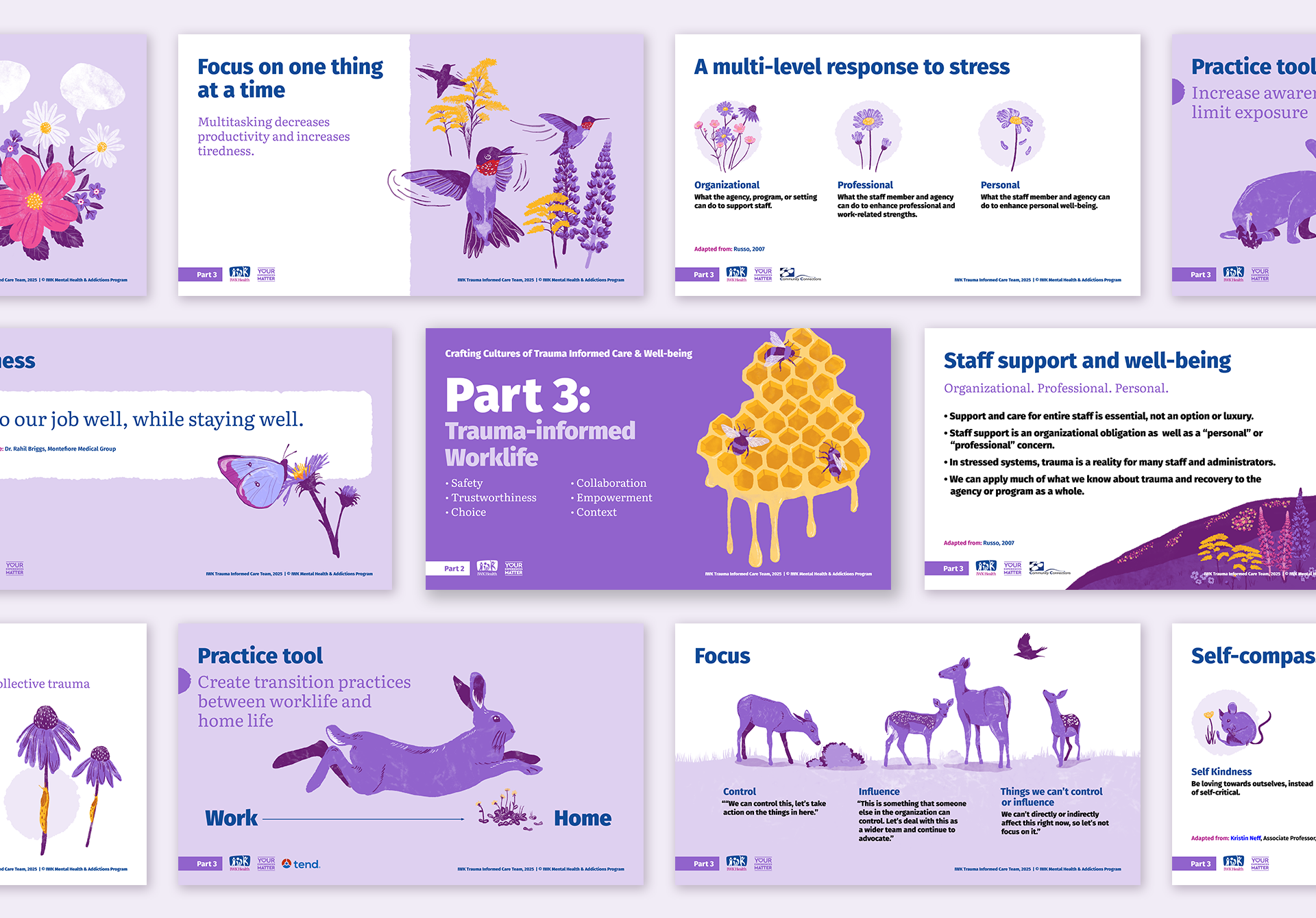
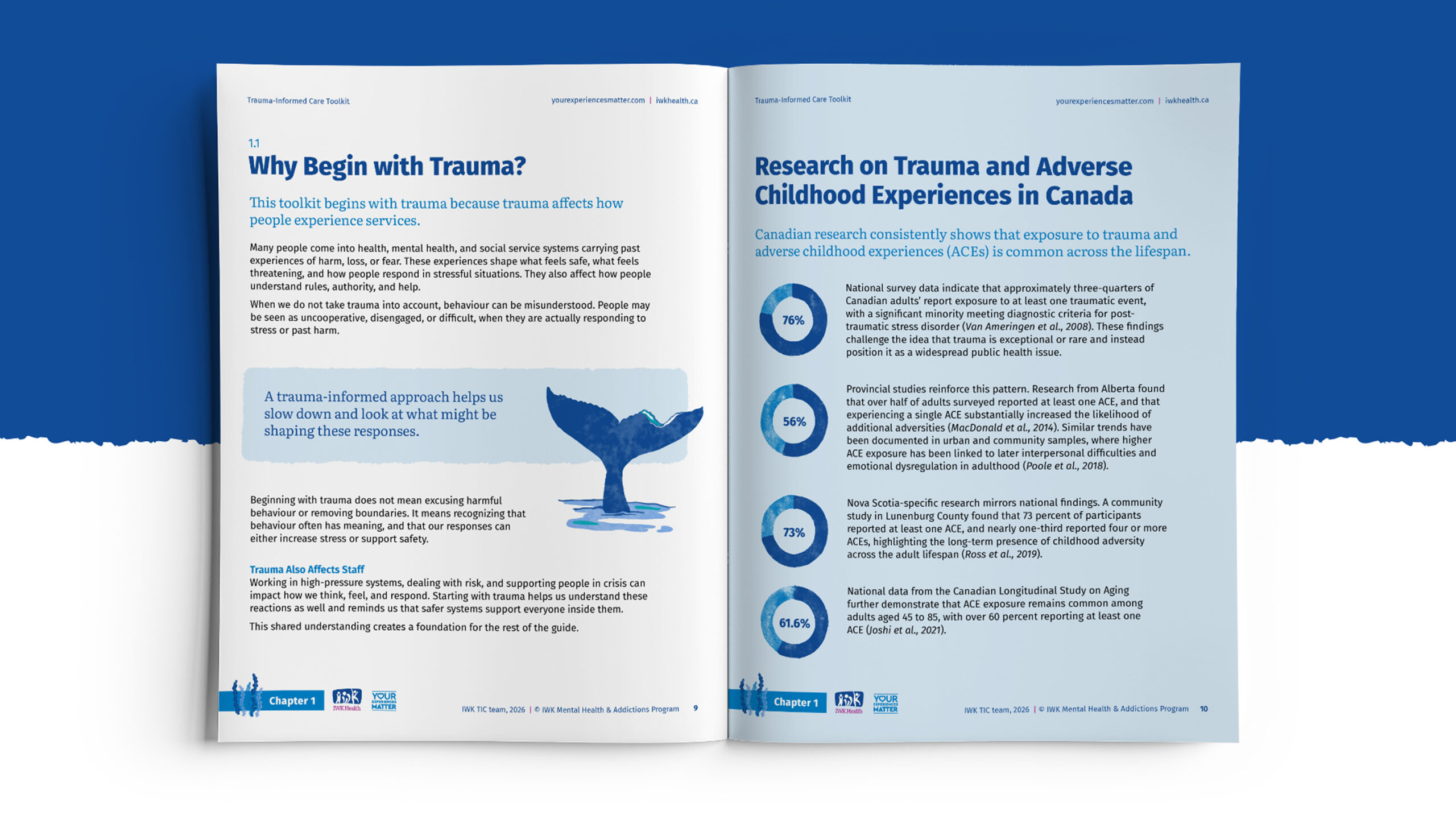
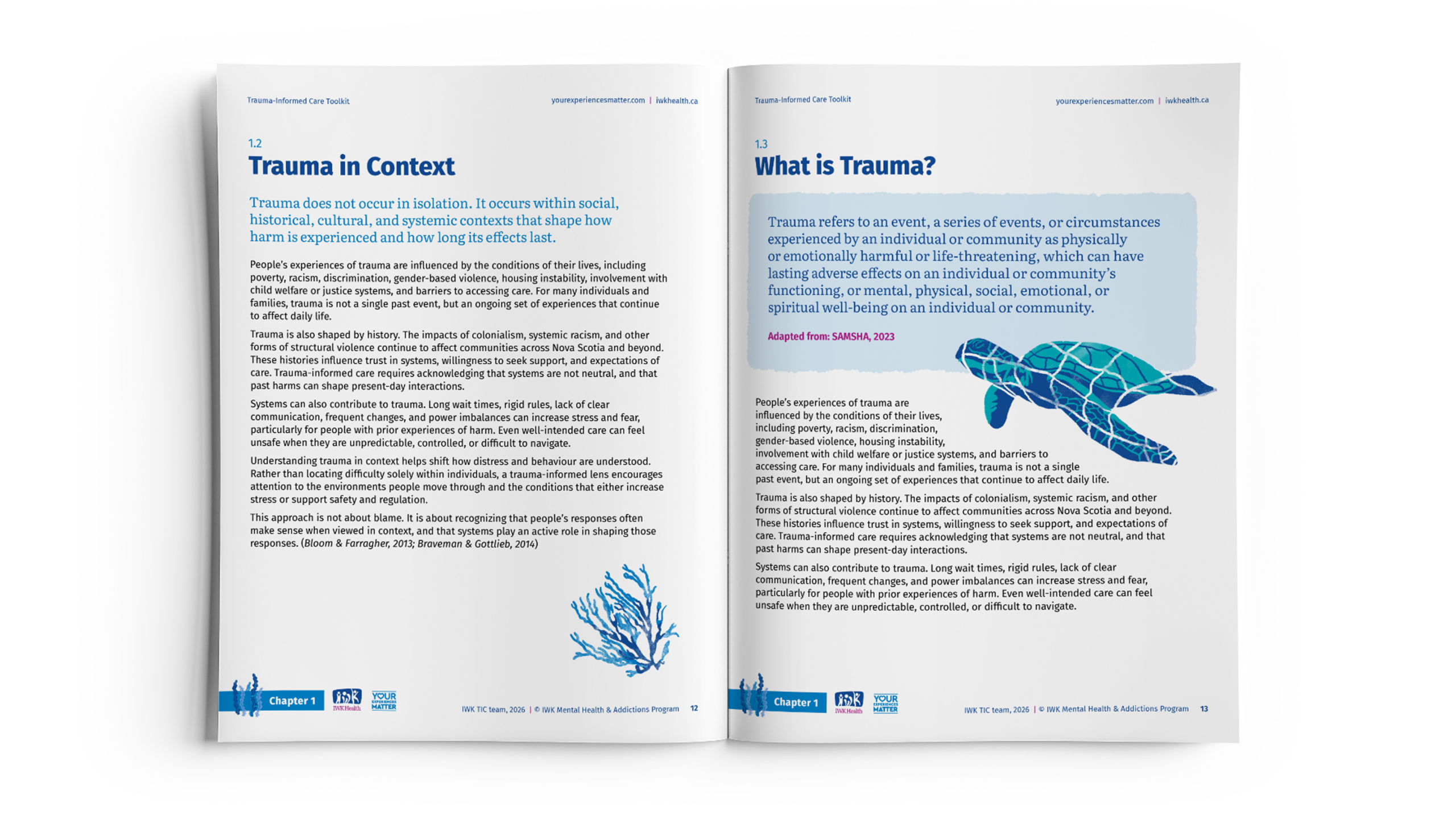
The studio collaborated with the IWK to build a comprehensive training toolkit that consolidates collective research into a refined user experience. This strategy is rooted in TIC design principles and focuses on four key principles that are visualized throughout the training materials.

A strategic framework for healing and connection
The design strategy focused on translating complex clinical data into an approachable and supportive visual language. And this was achieved by prioritizing the following four principles:
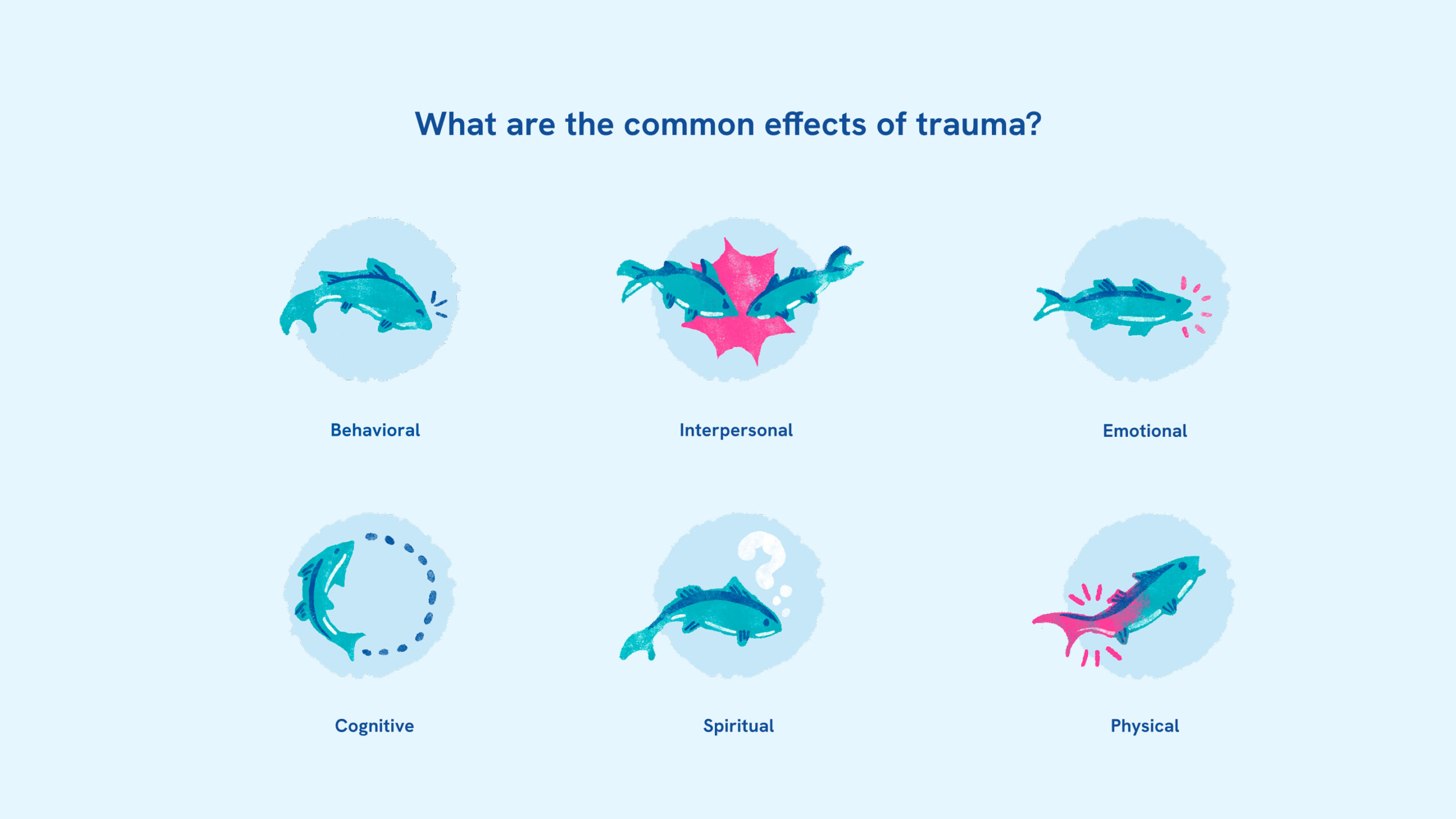
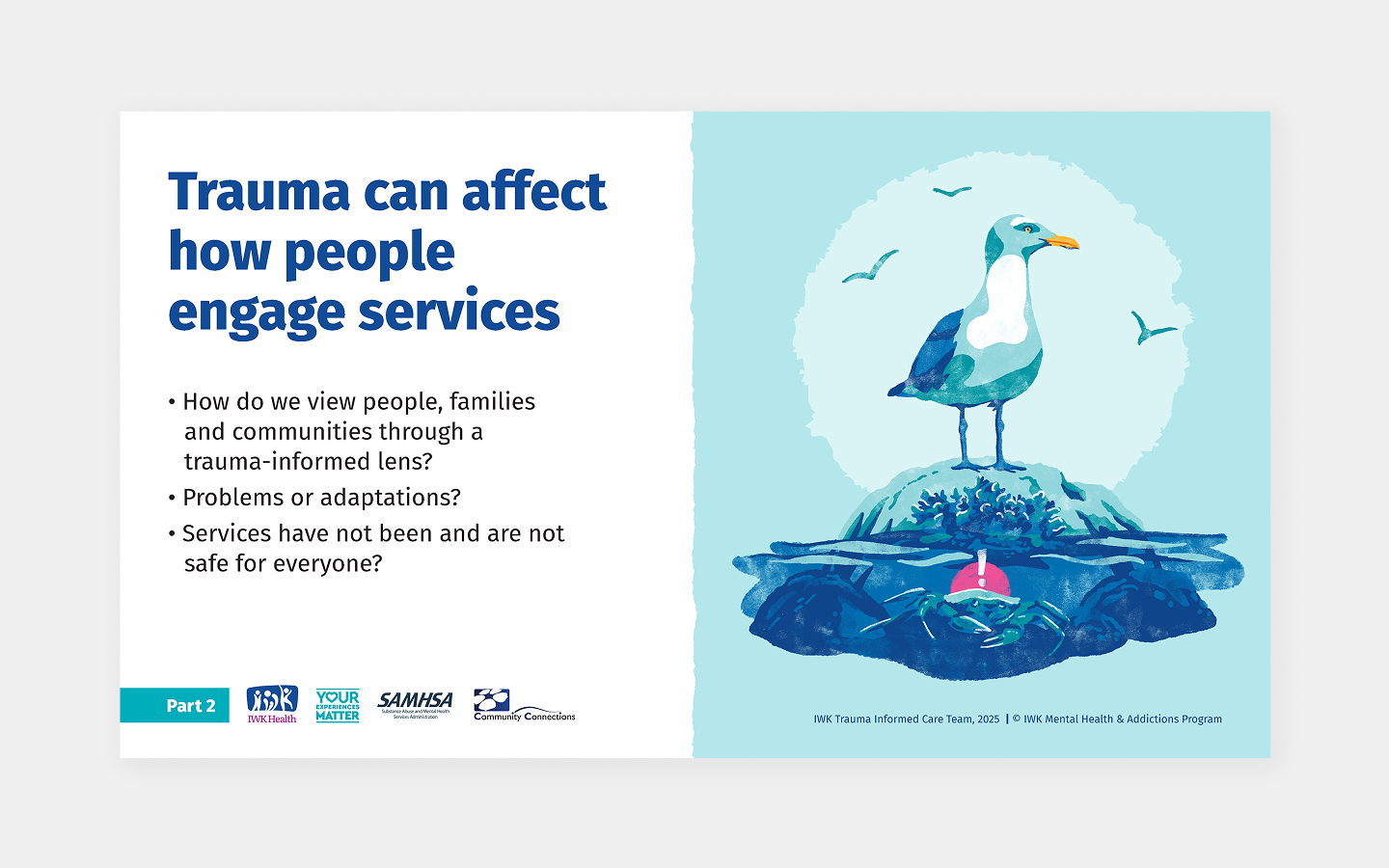
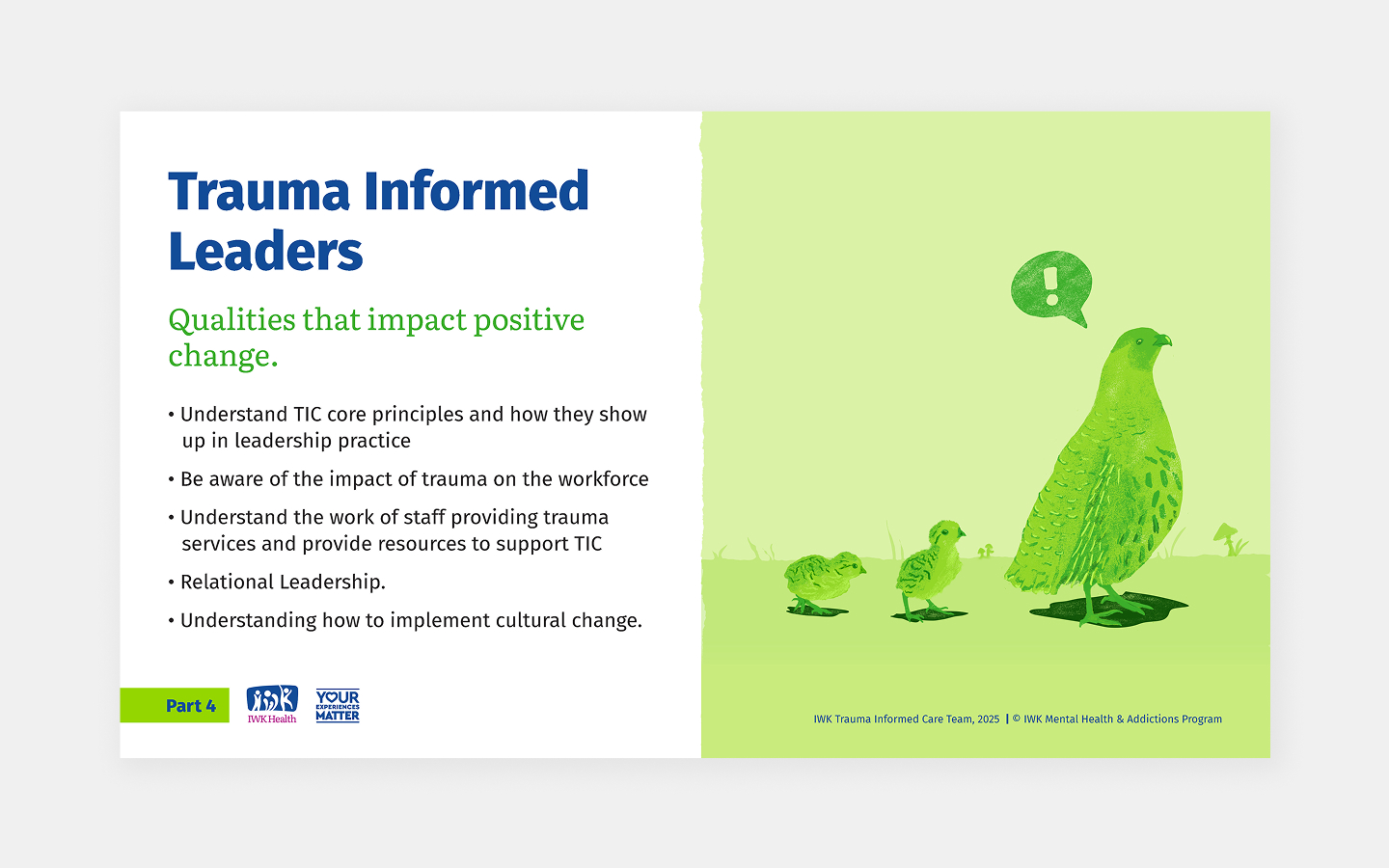
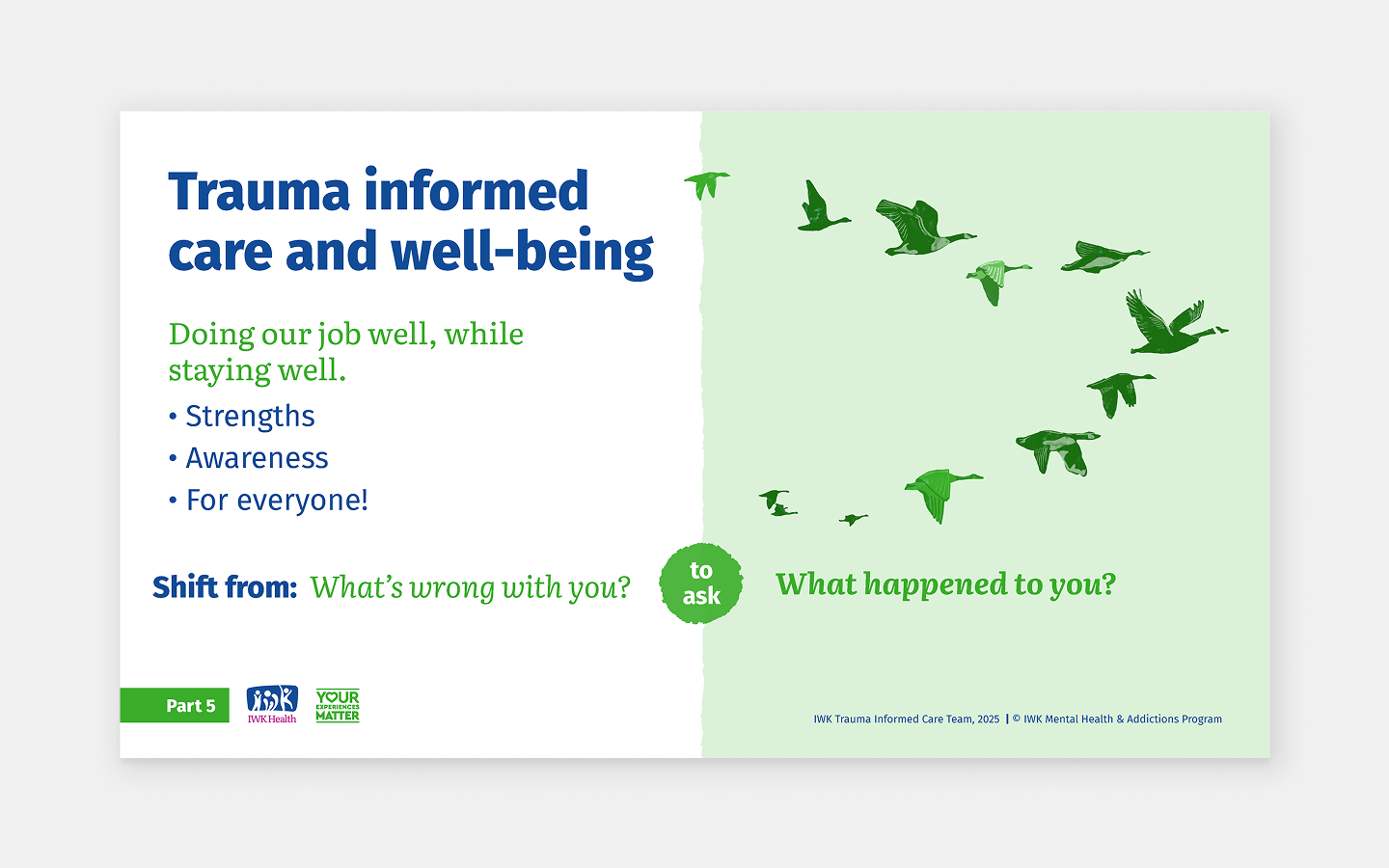
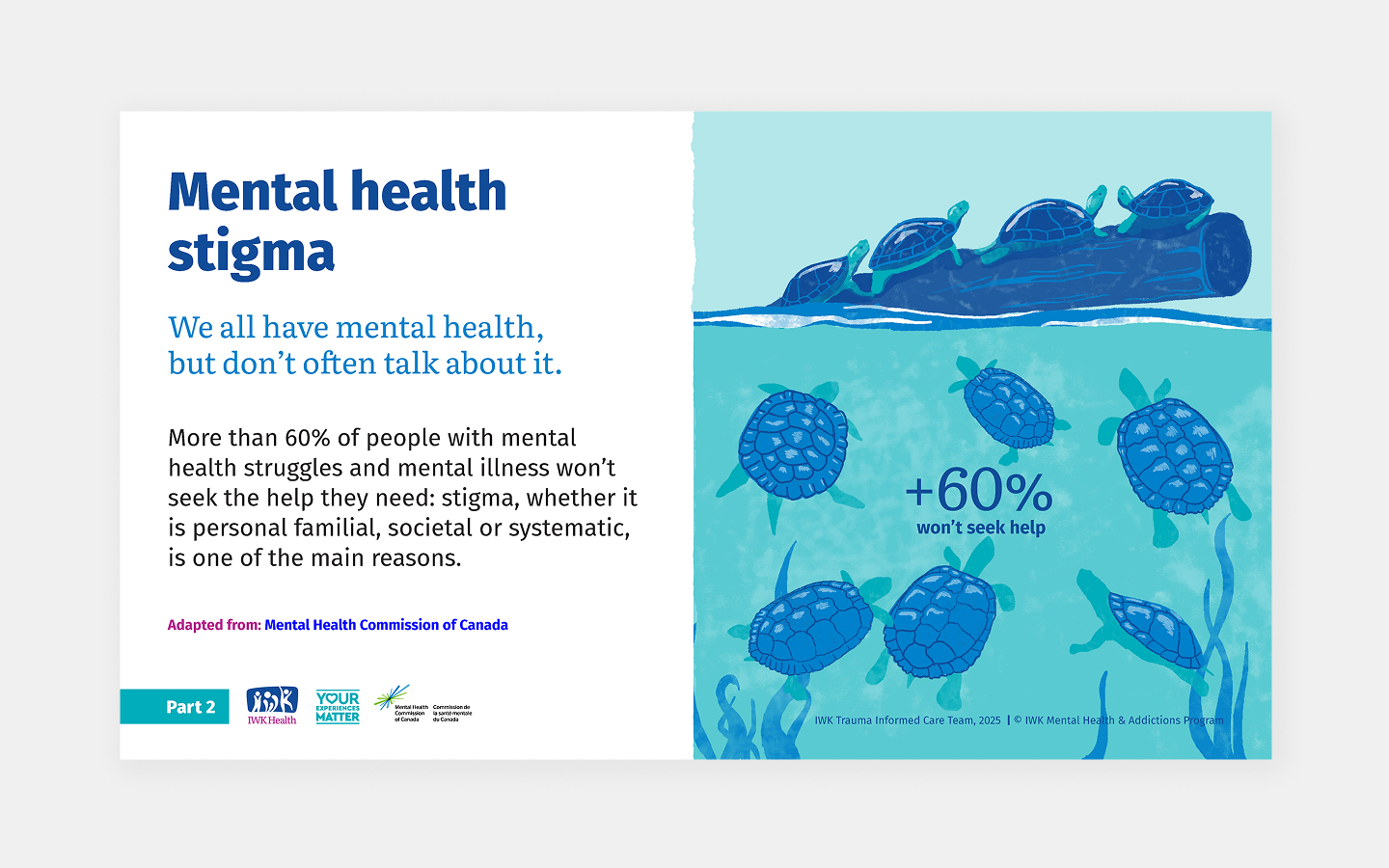
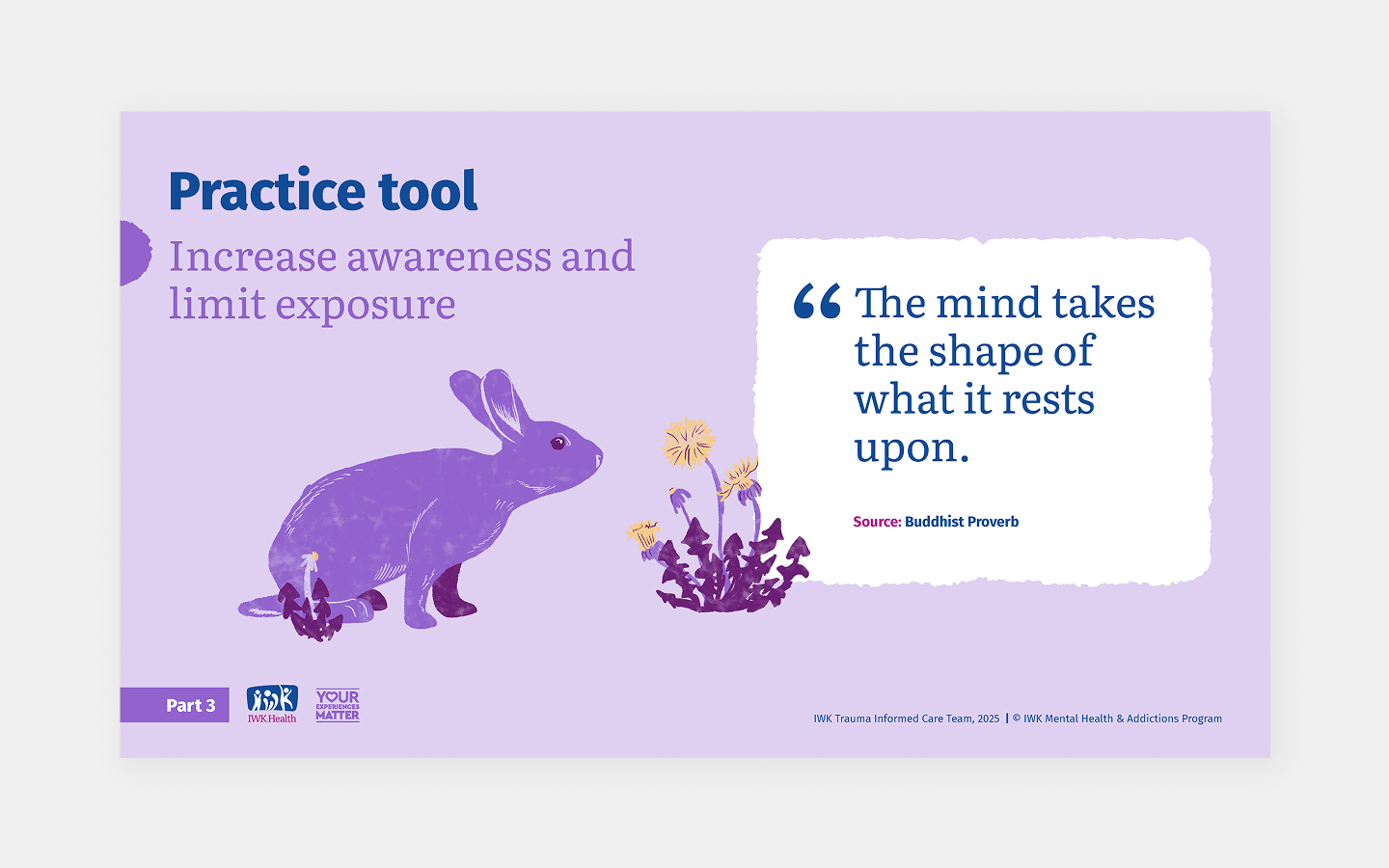
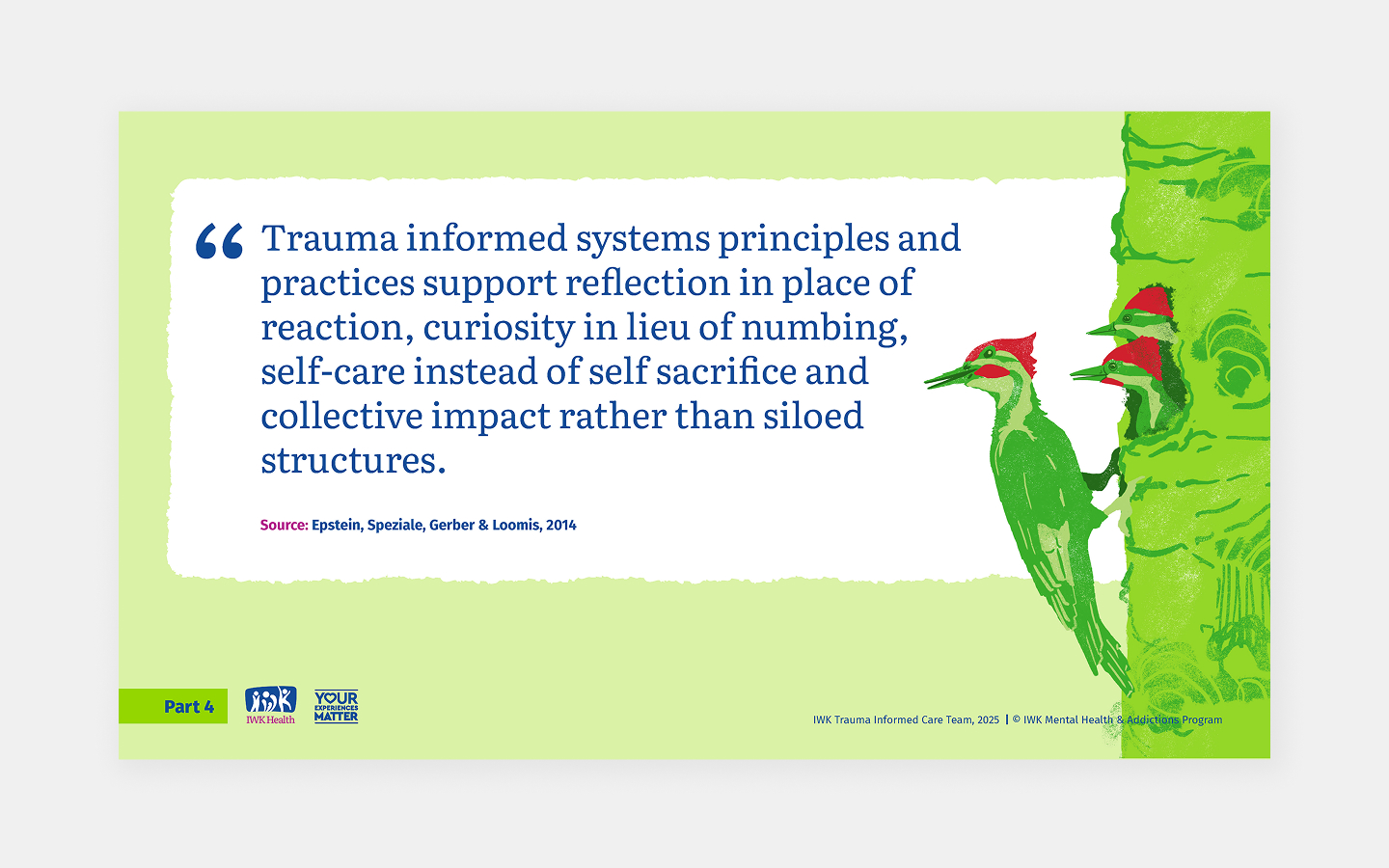
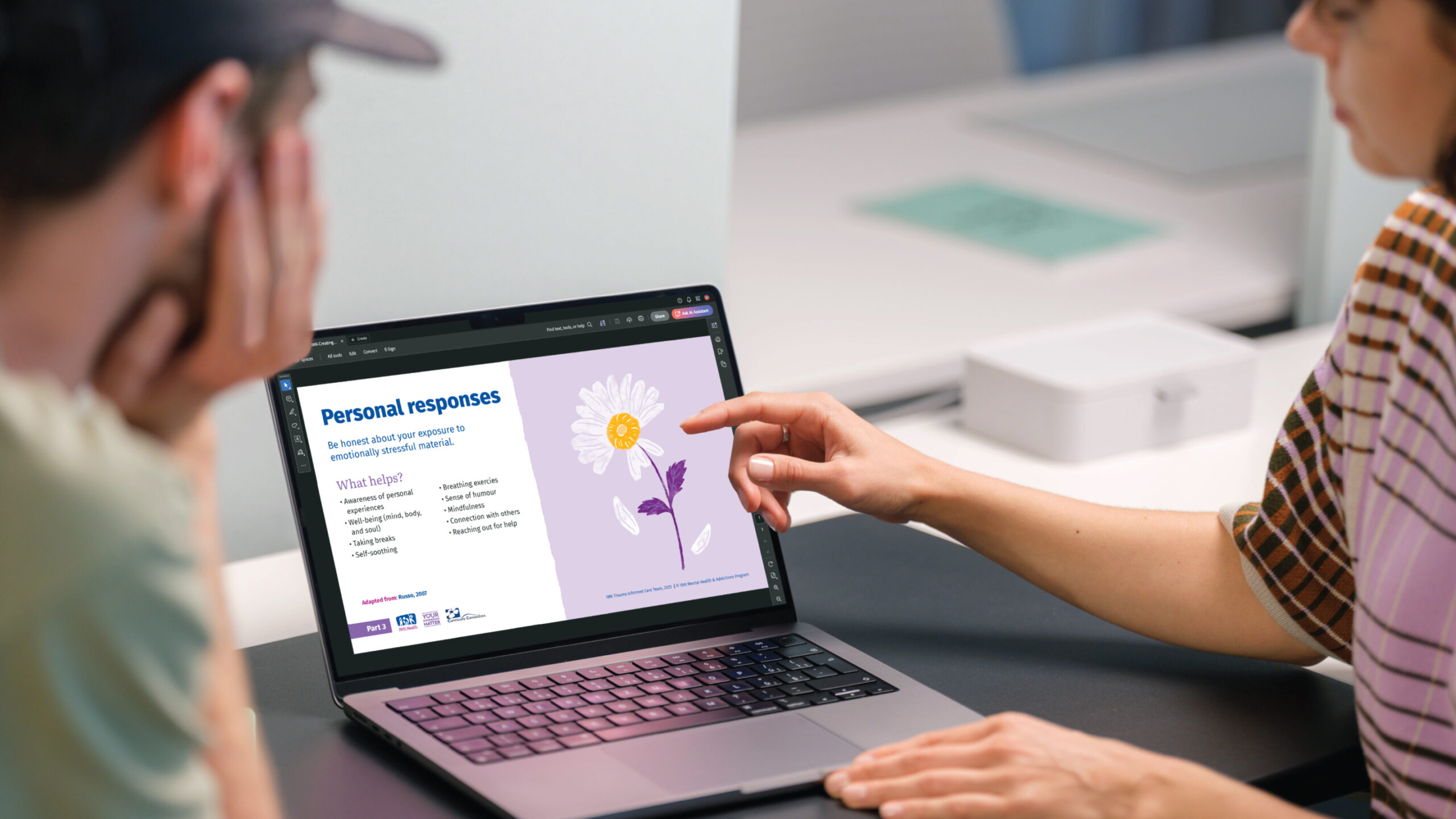
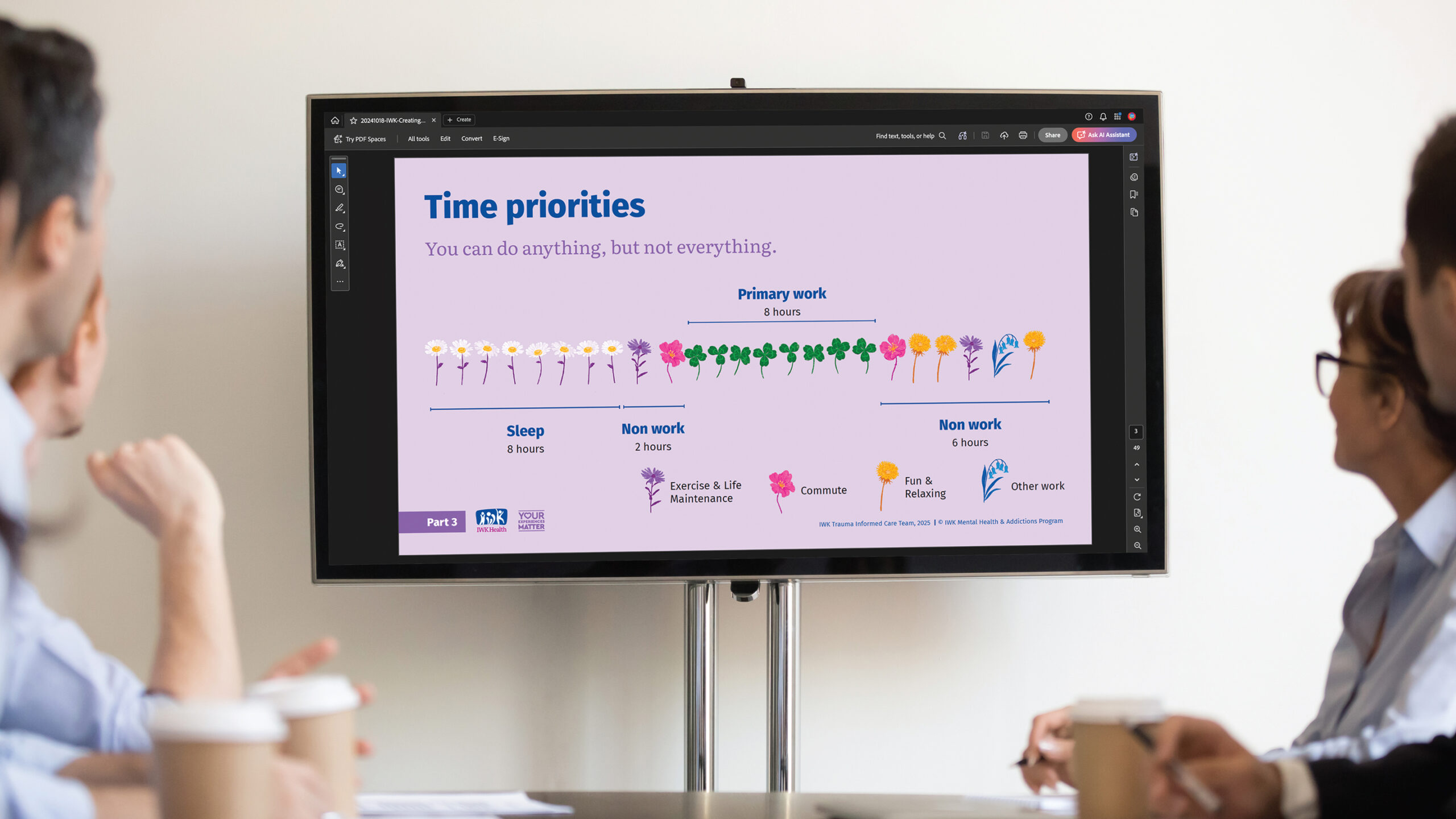
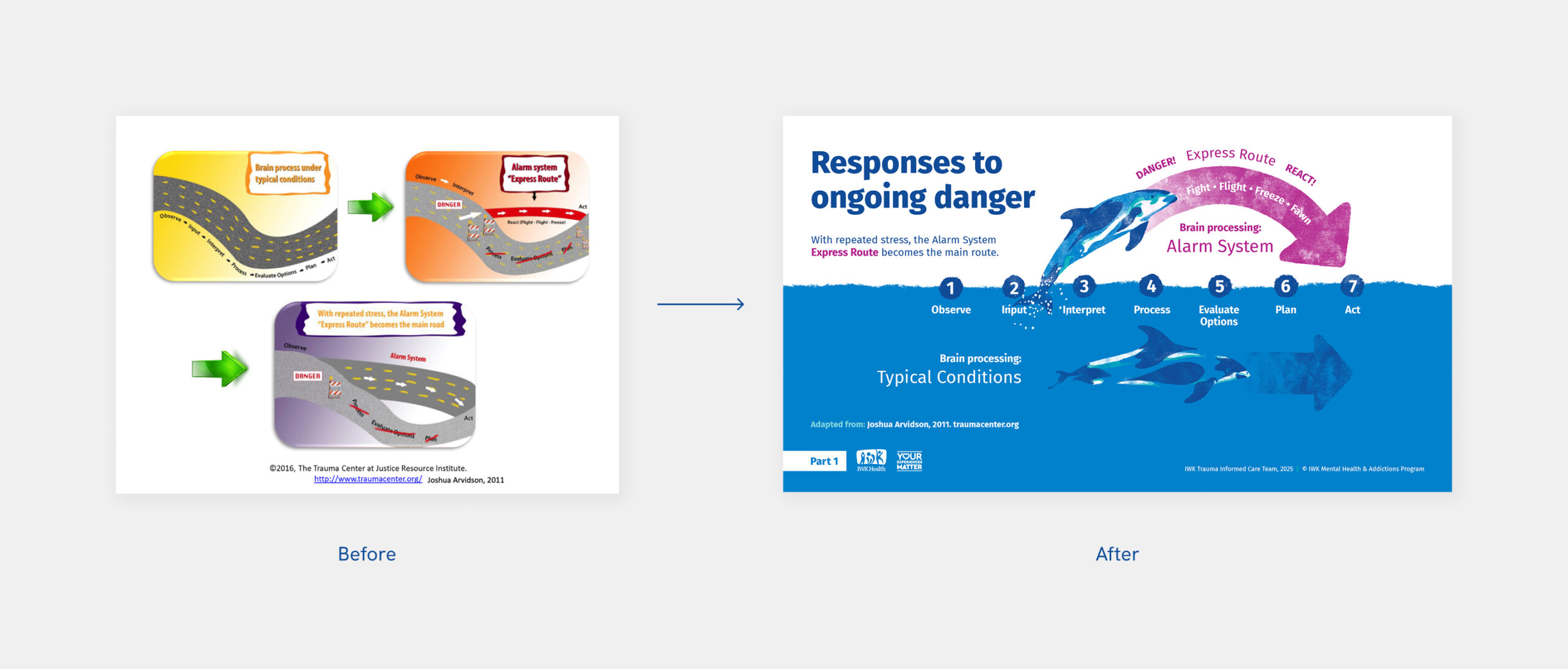
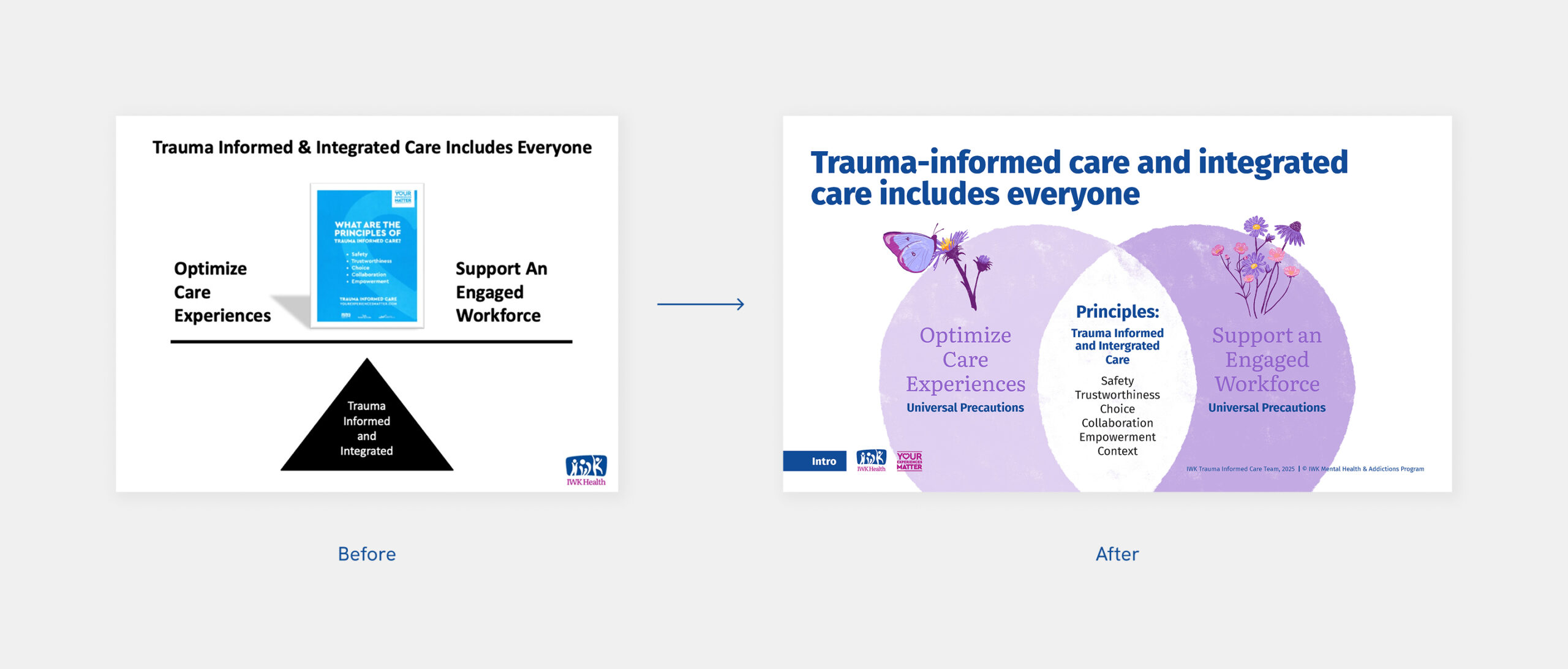
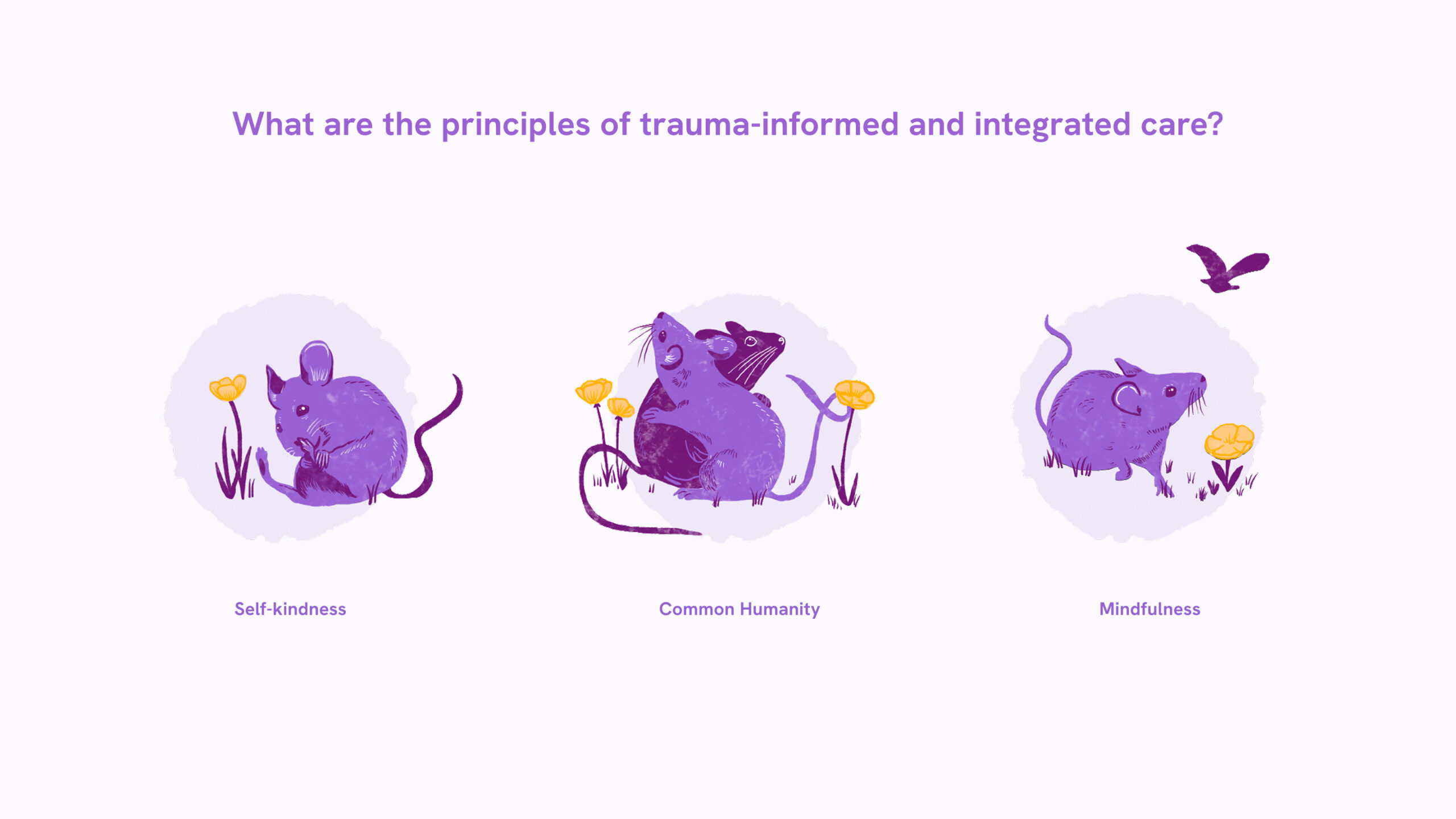
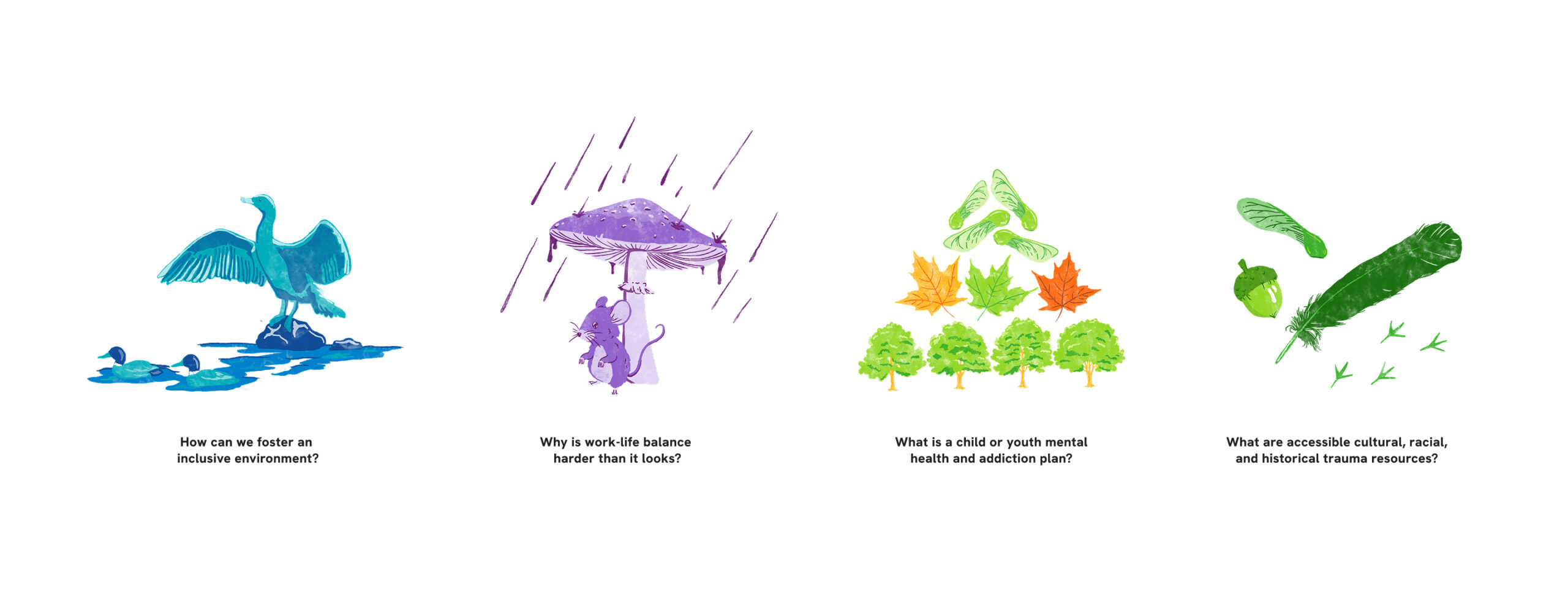
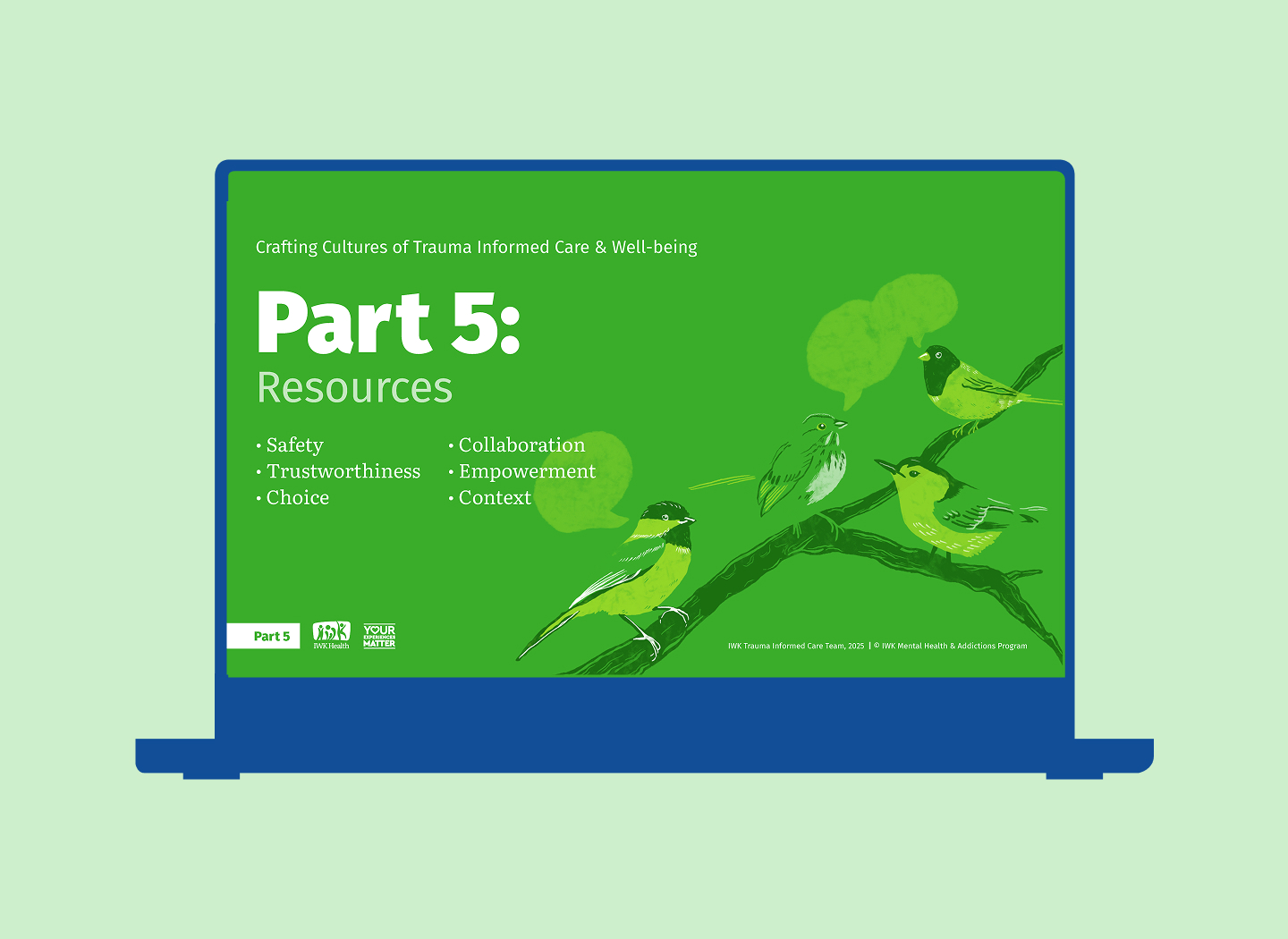
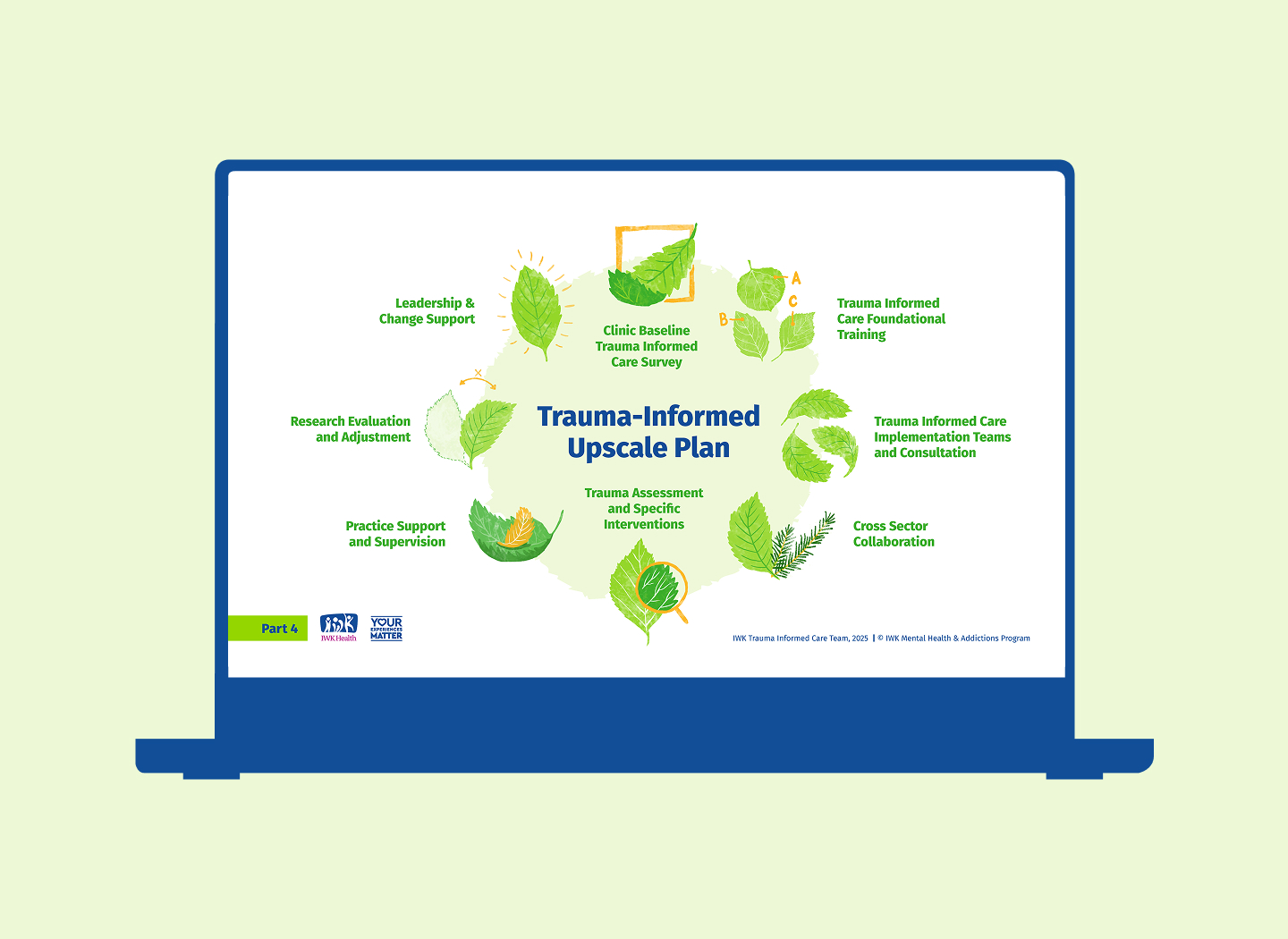
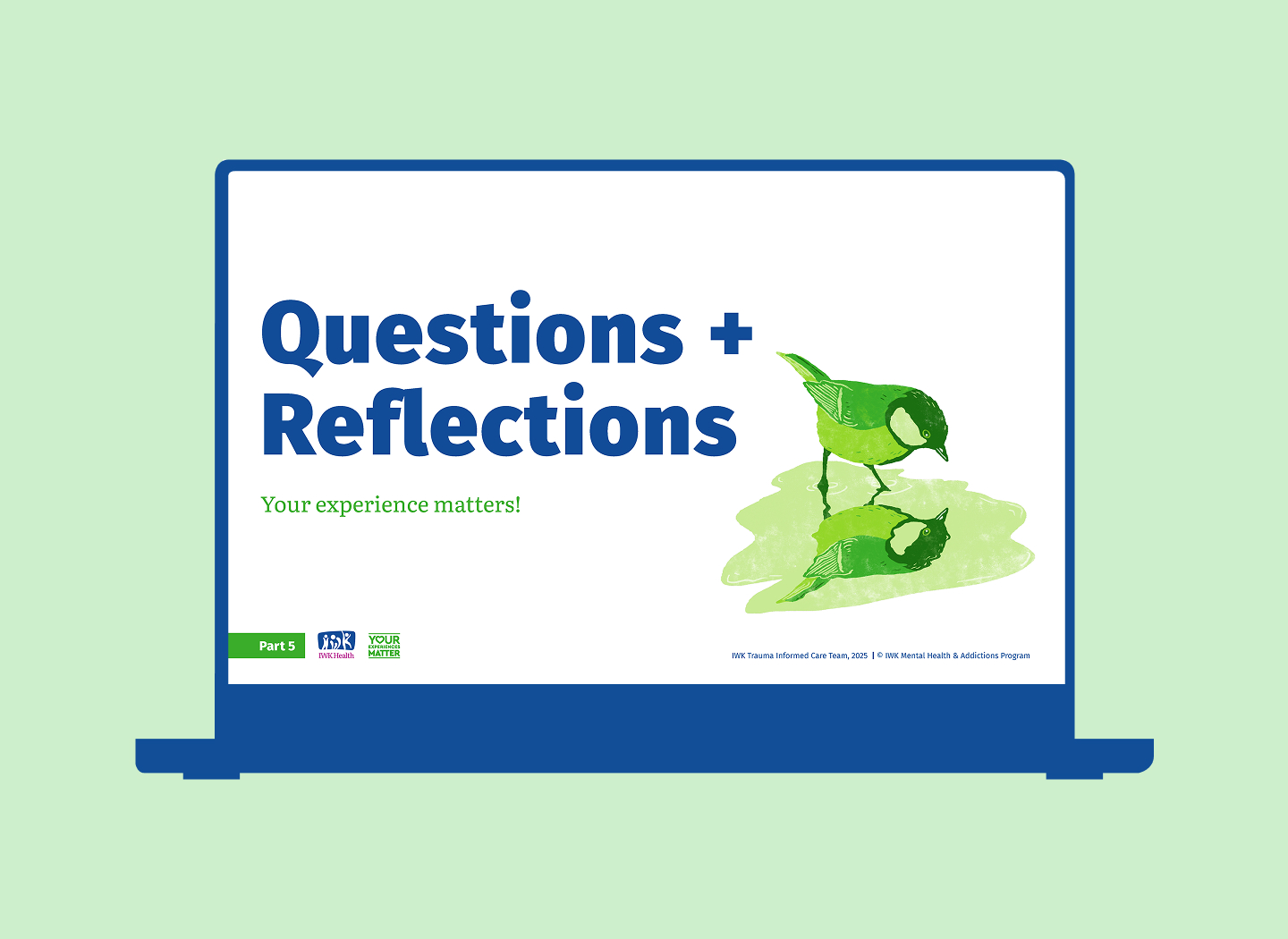
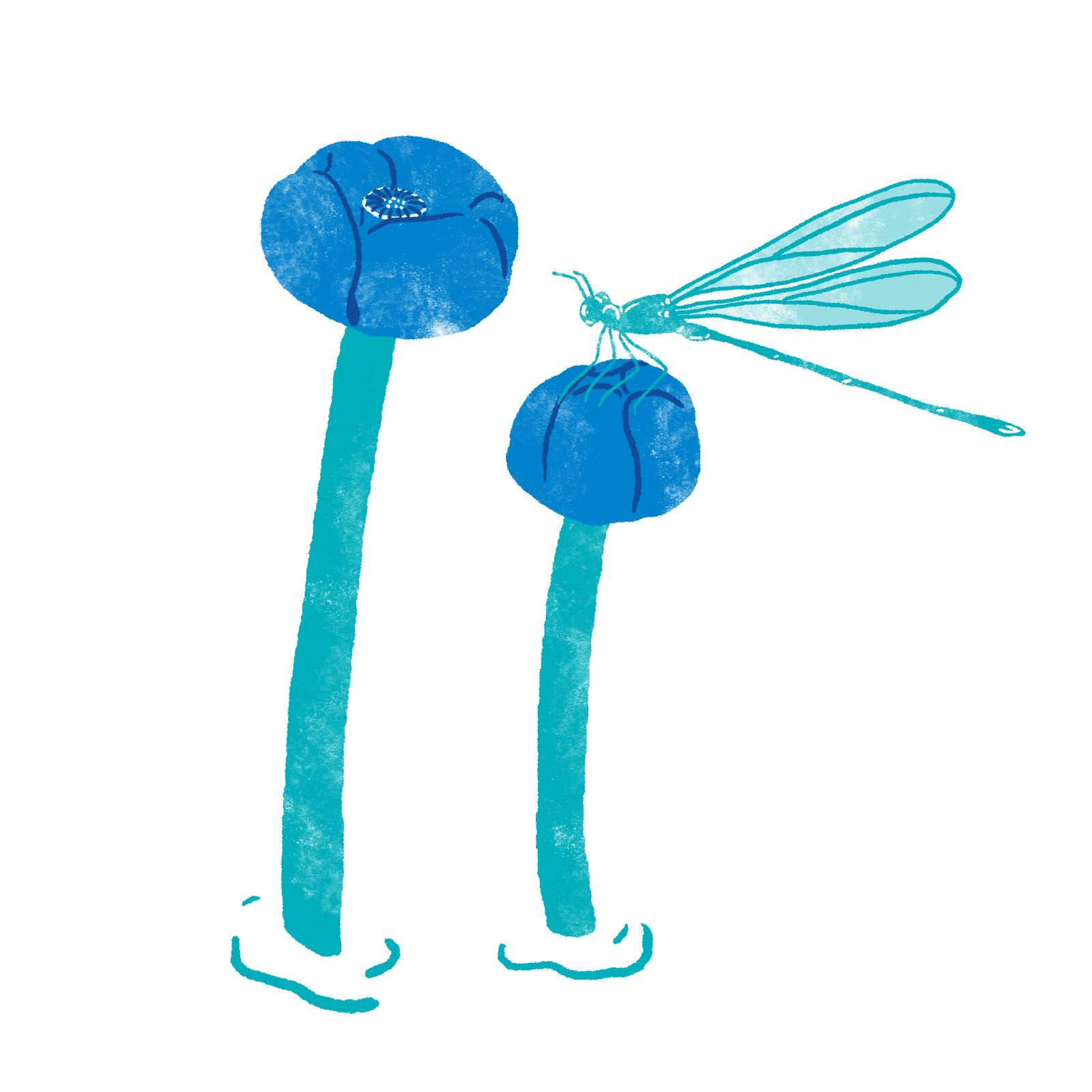
Access to Nature: The team utilized Nova Scotia flora and fauna to connect the approach to the local ecology. This imagery promotes the positive health impacts of joy, healing, solace, and reflection.
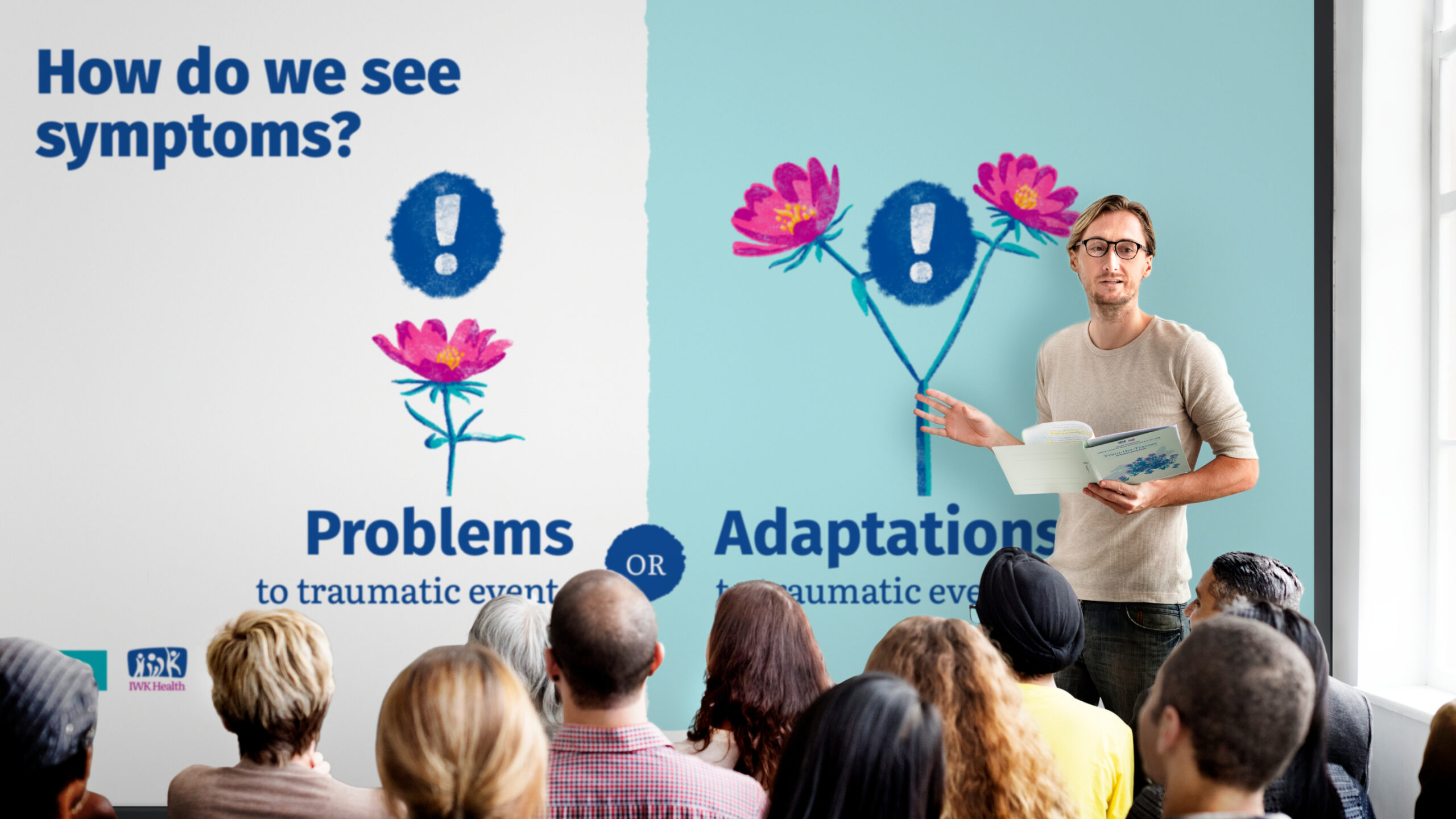
Artful Features: Illustration serves as the primary visual link across all content to foster a sense of belonging and empowerment. It functions as a meaningful outlet for connection and self-expression.
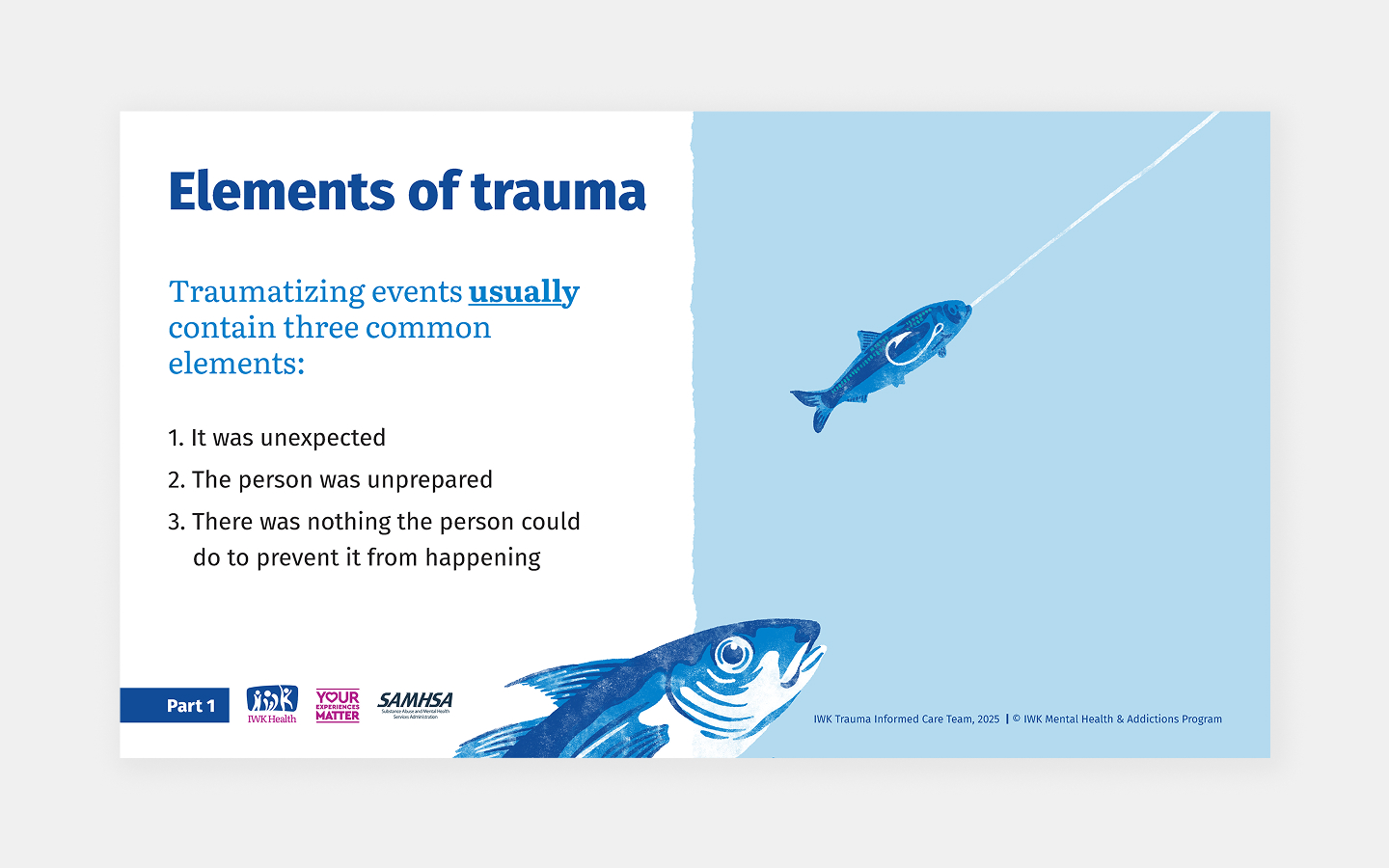
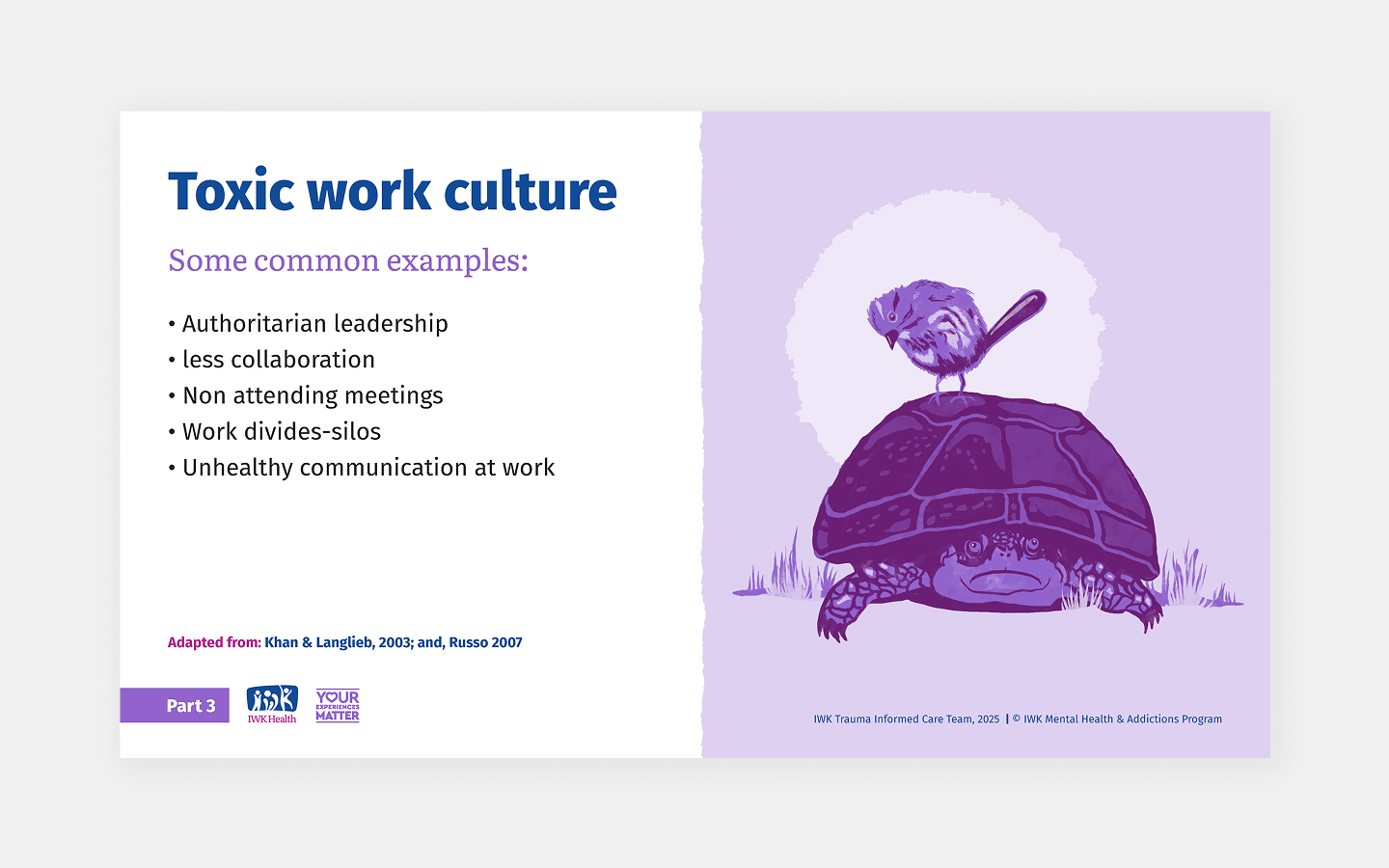
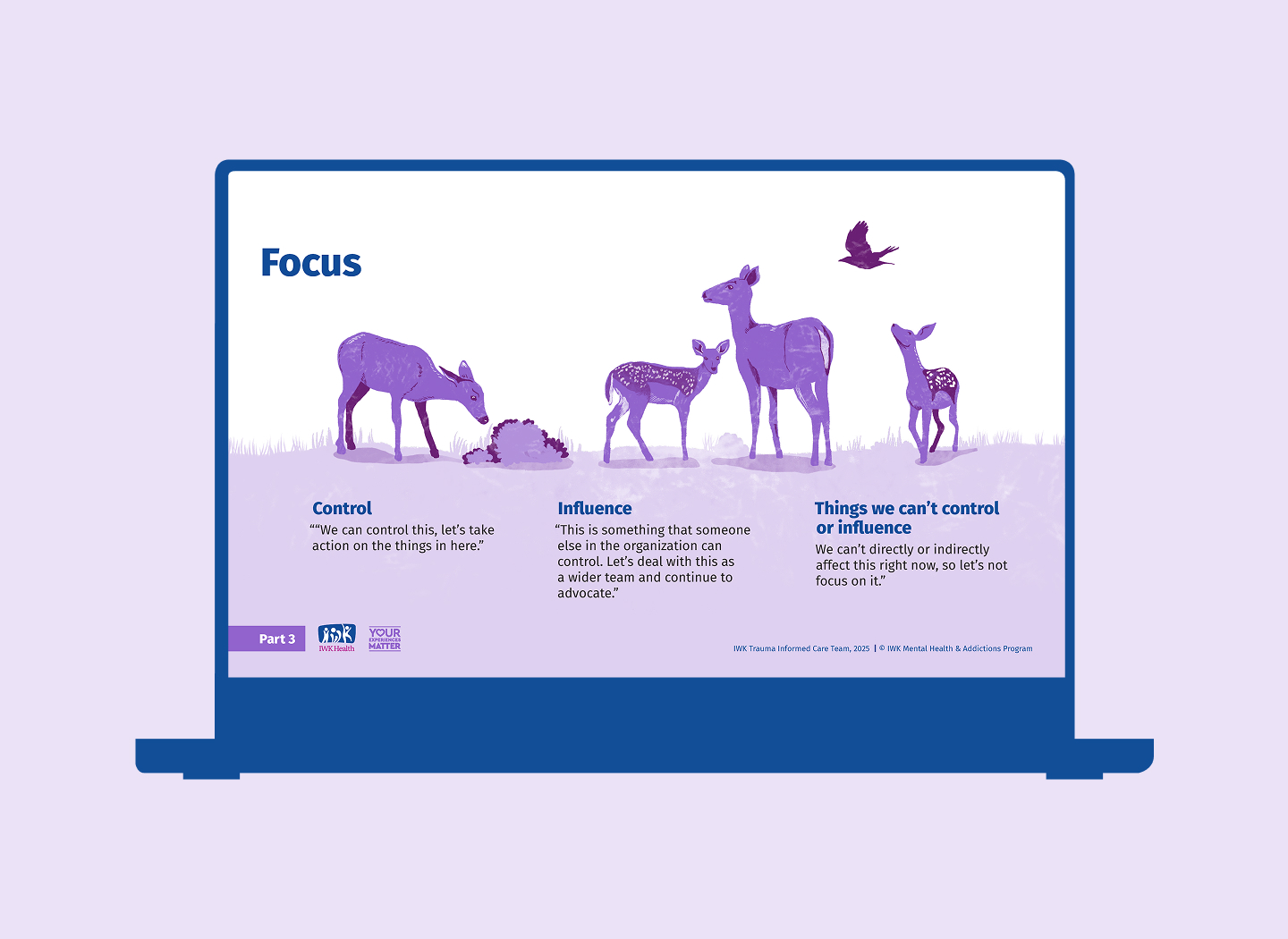
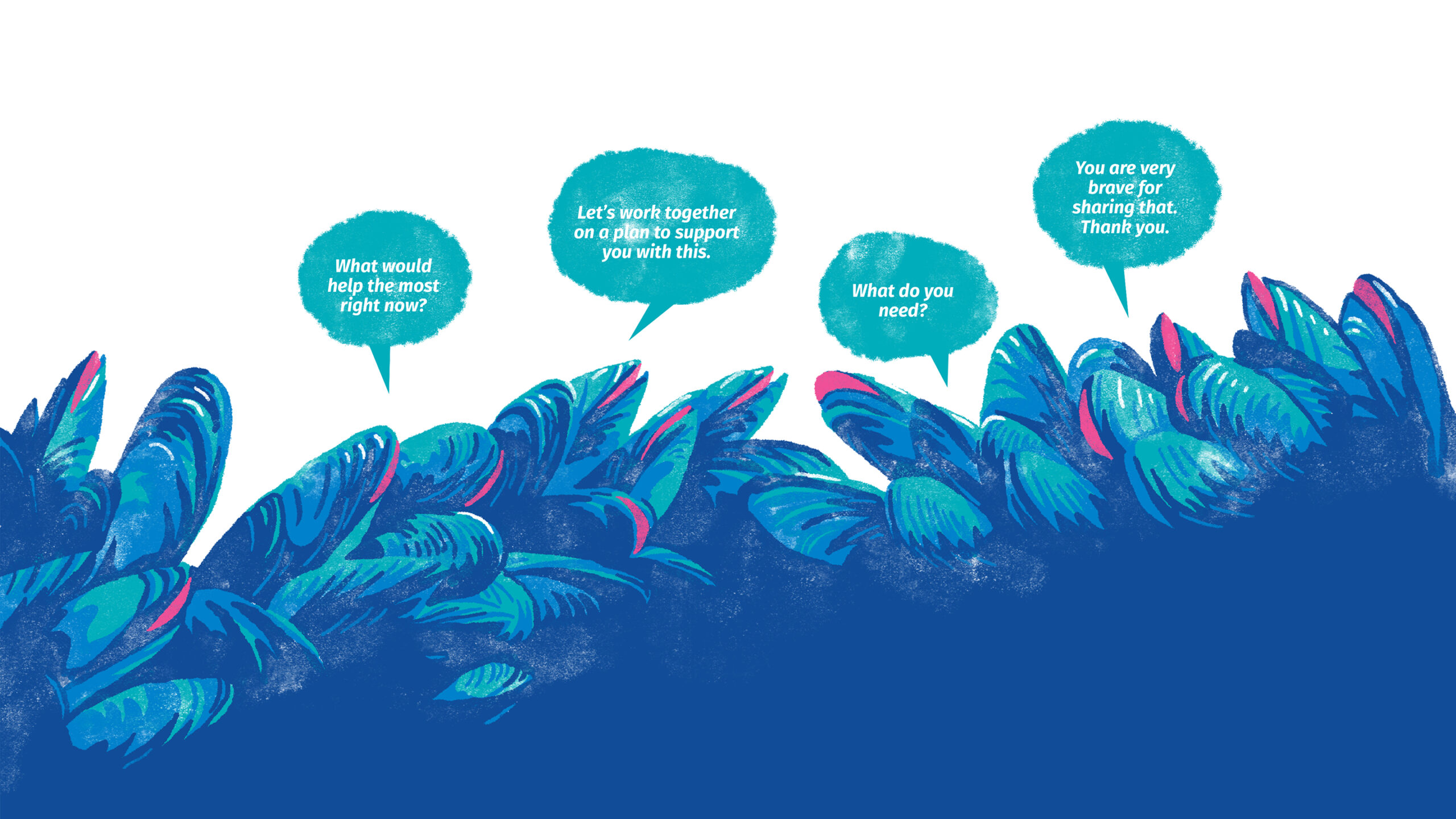
Positive Distraction: The illustrative style strategically anthropomorphizes wildlife through shared human experiences. These parallels are designed to alleviate stress, elicit positive reactions, and maintain the attention of the learner.
Simplicity and Clarity: Because TIC concepts can be new and overwhelming, the studio prioritized clean design features. This focus on uncluttering information and balancing space ensures that the compositions remain calm and easy to navigate.

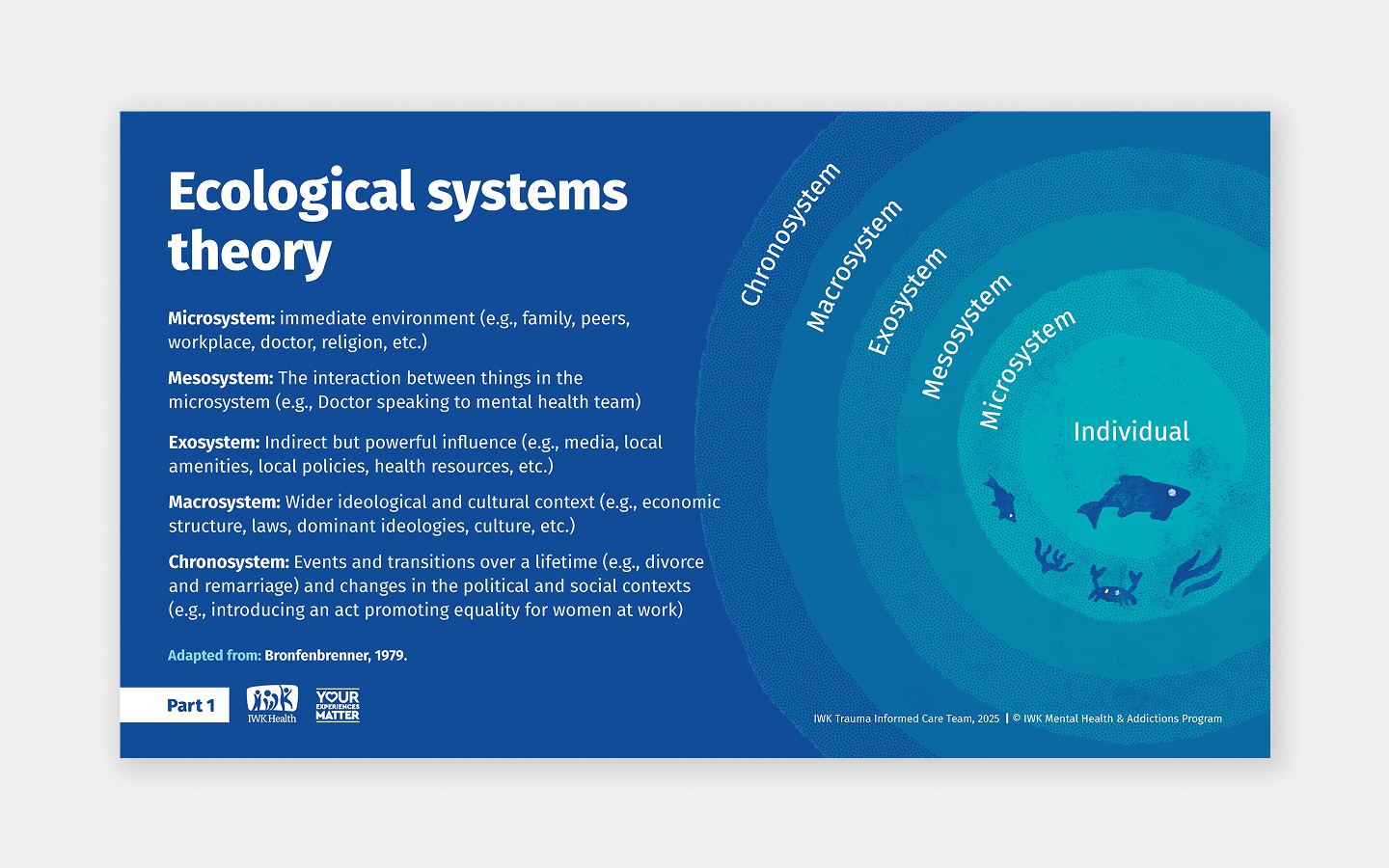
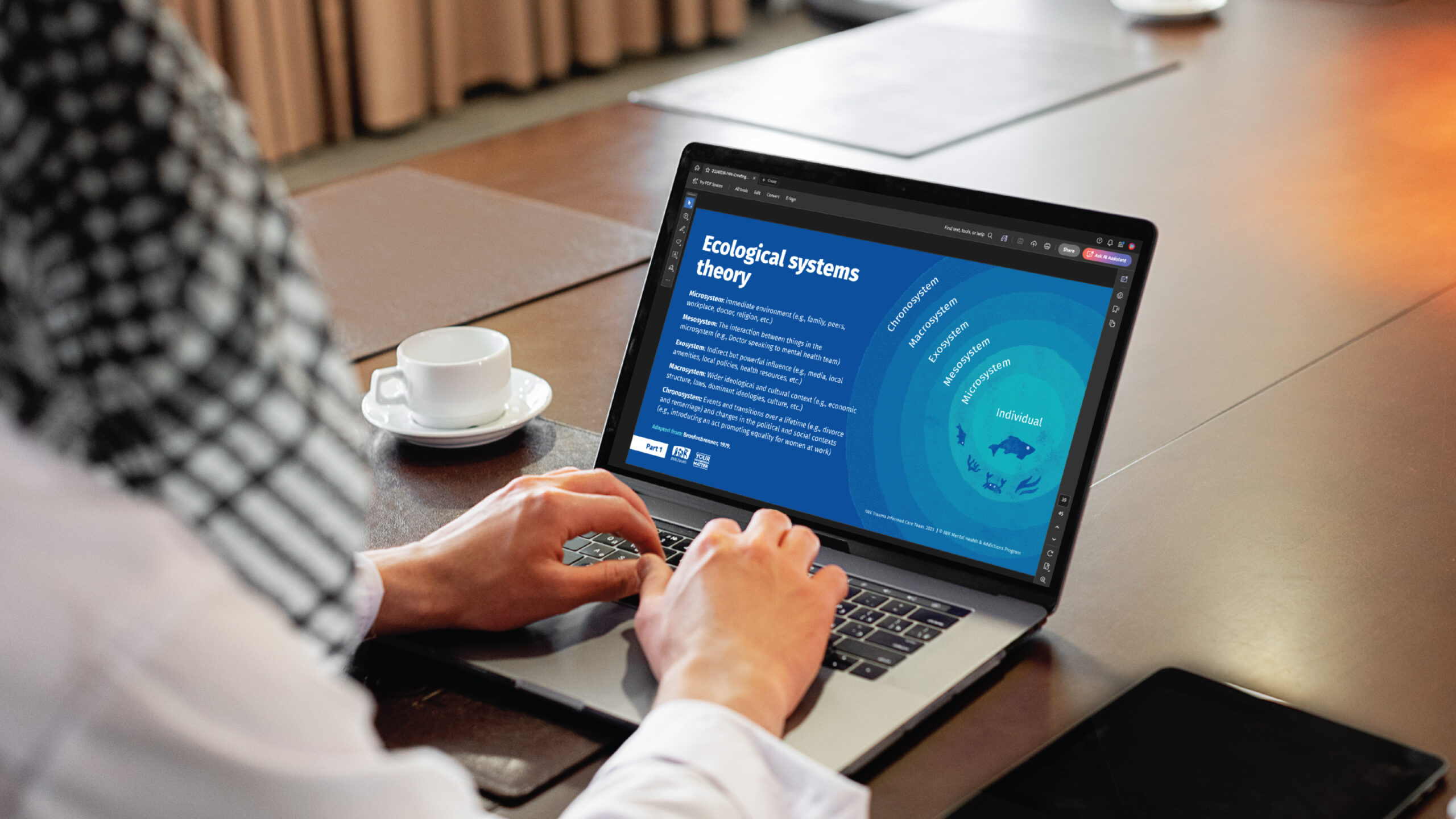
Navigating complexity with ecological systems
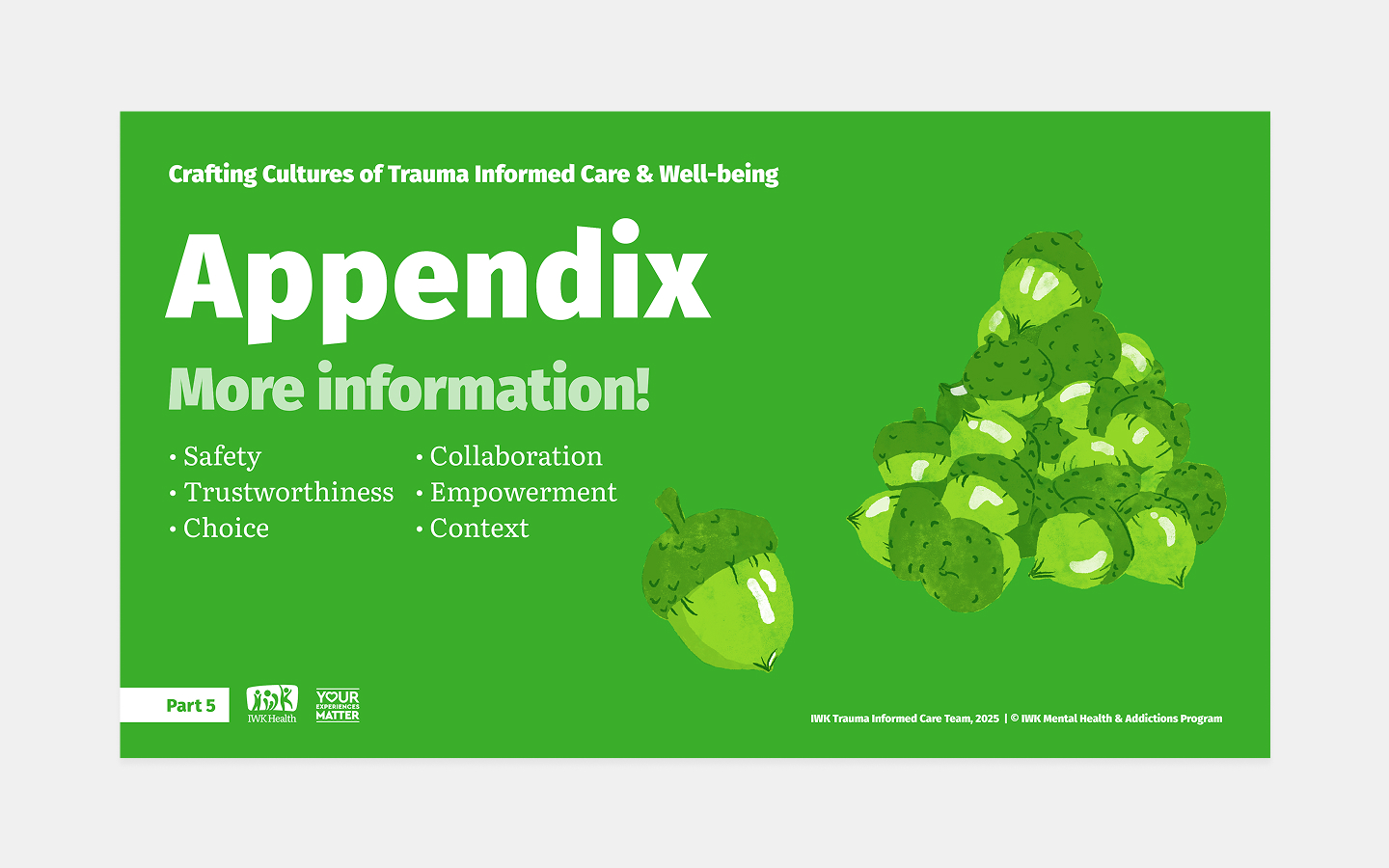
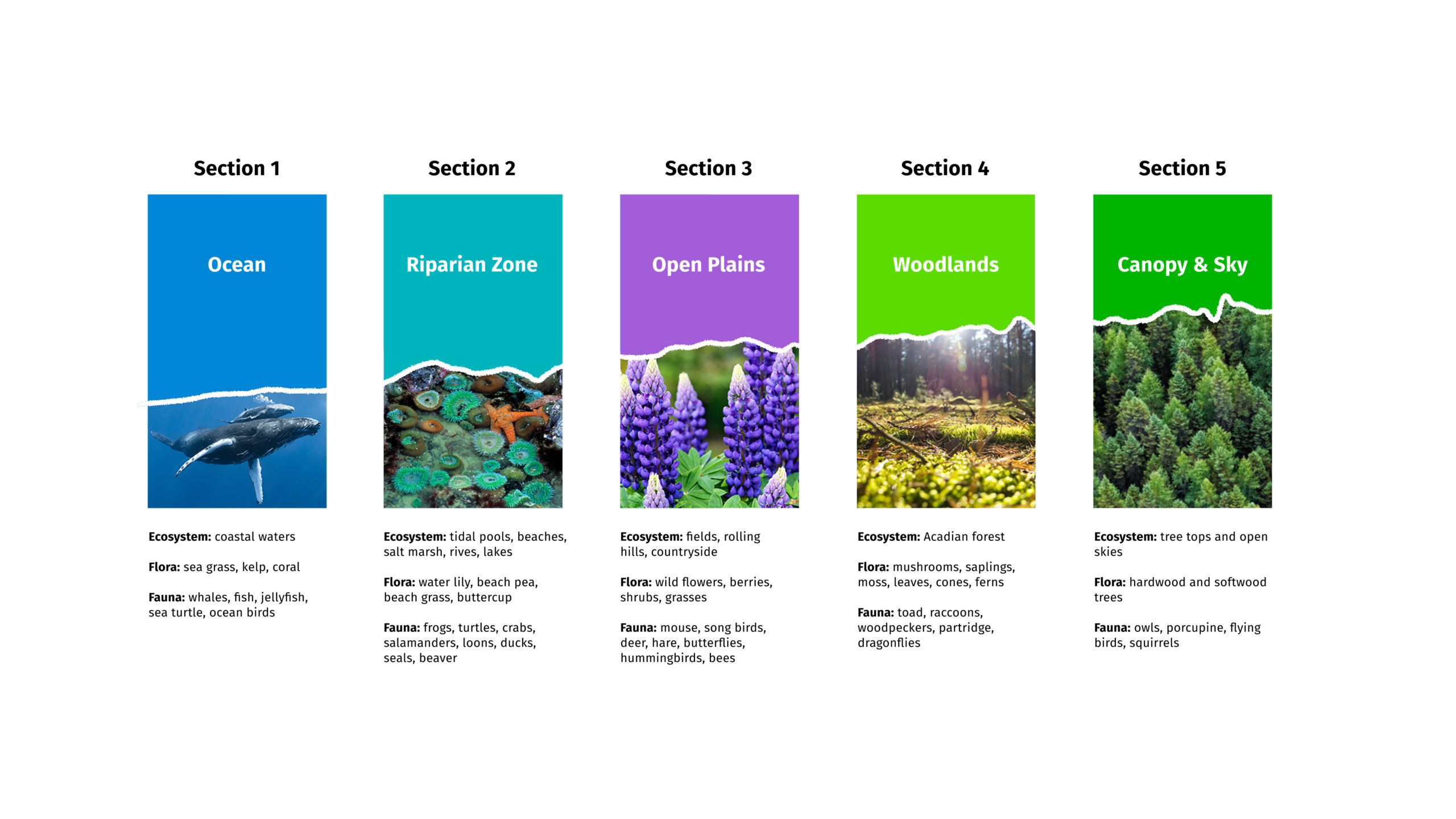
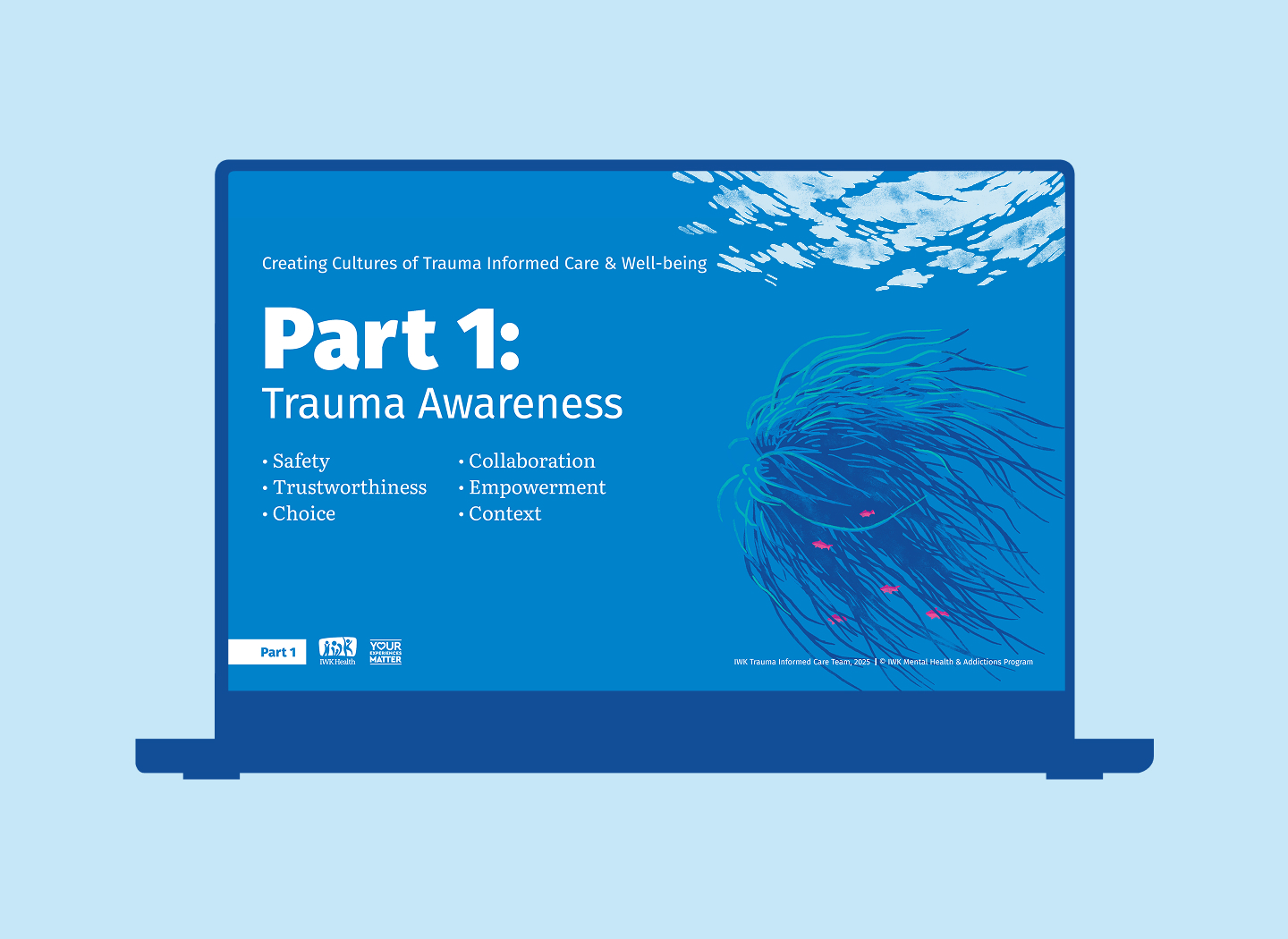
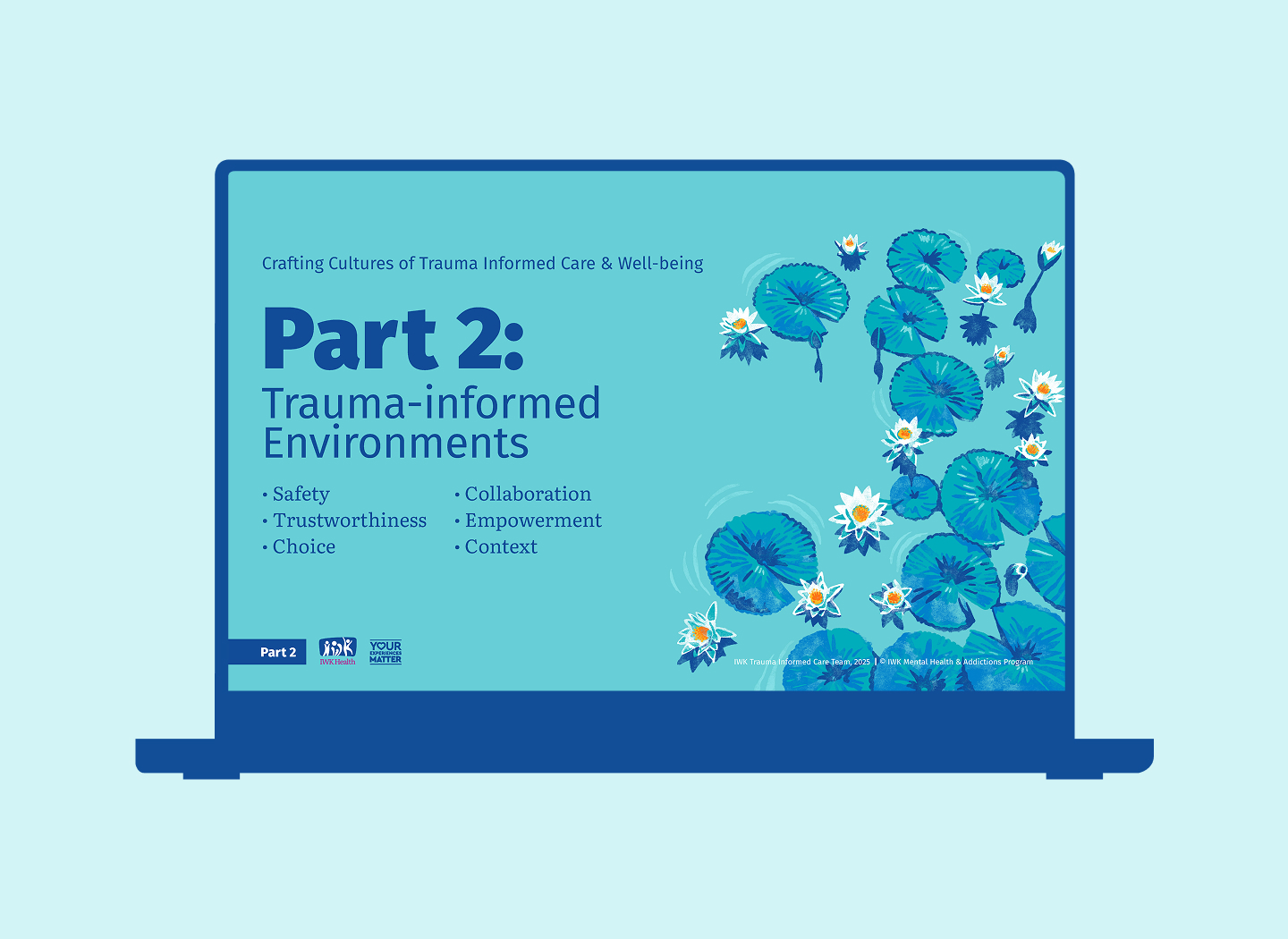
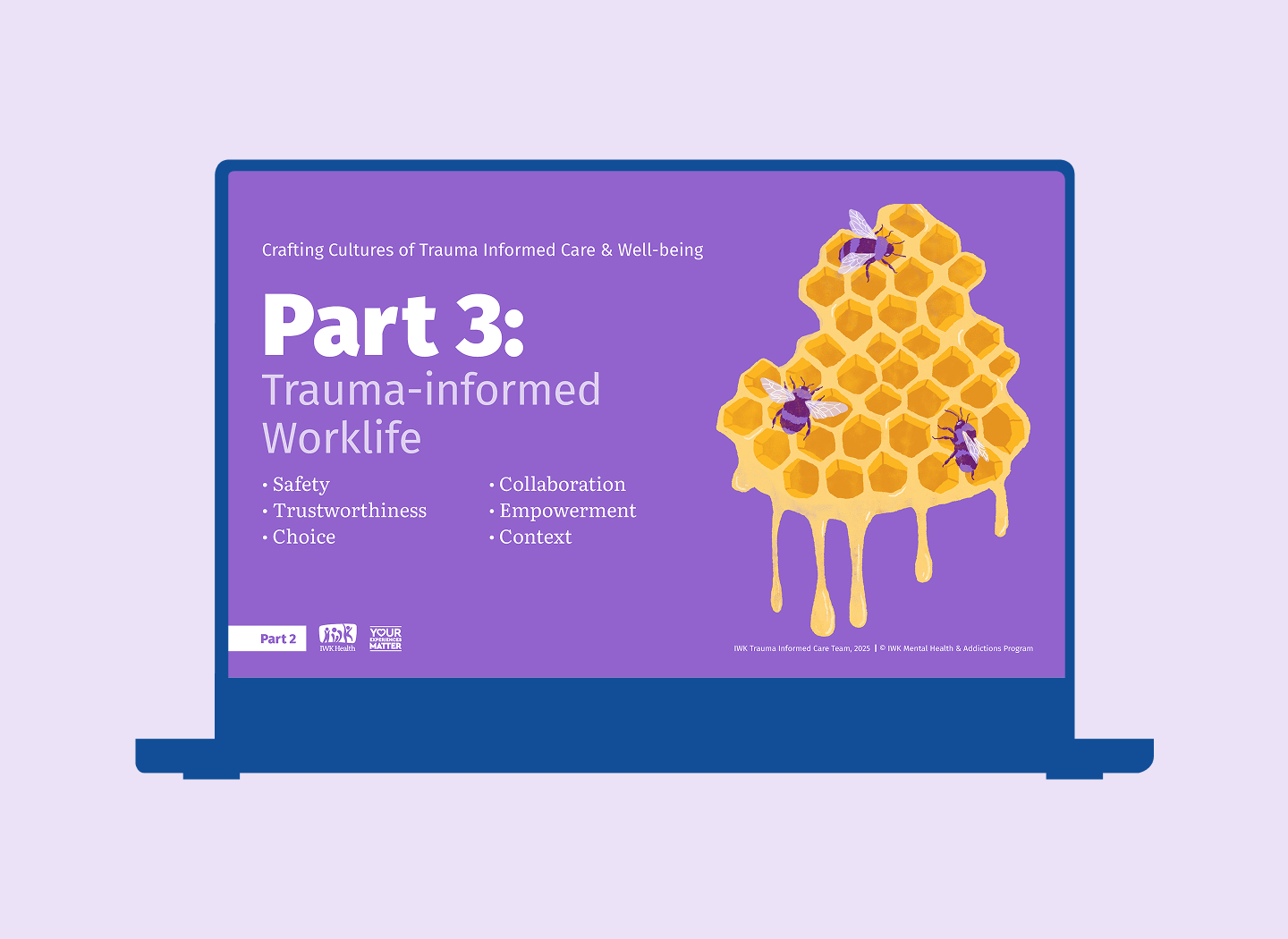
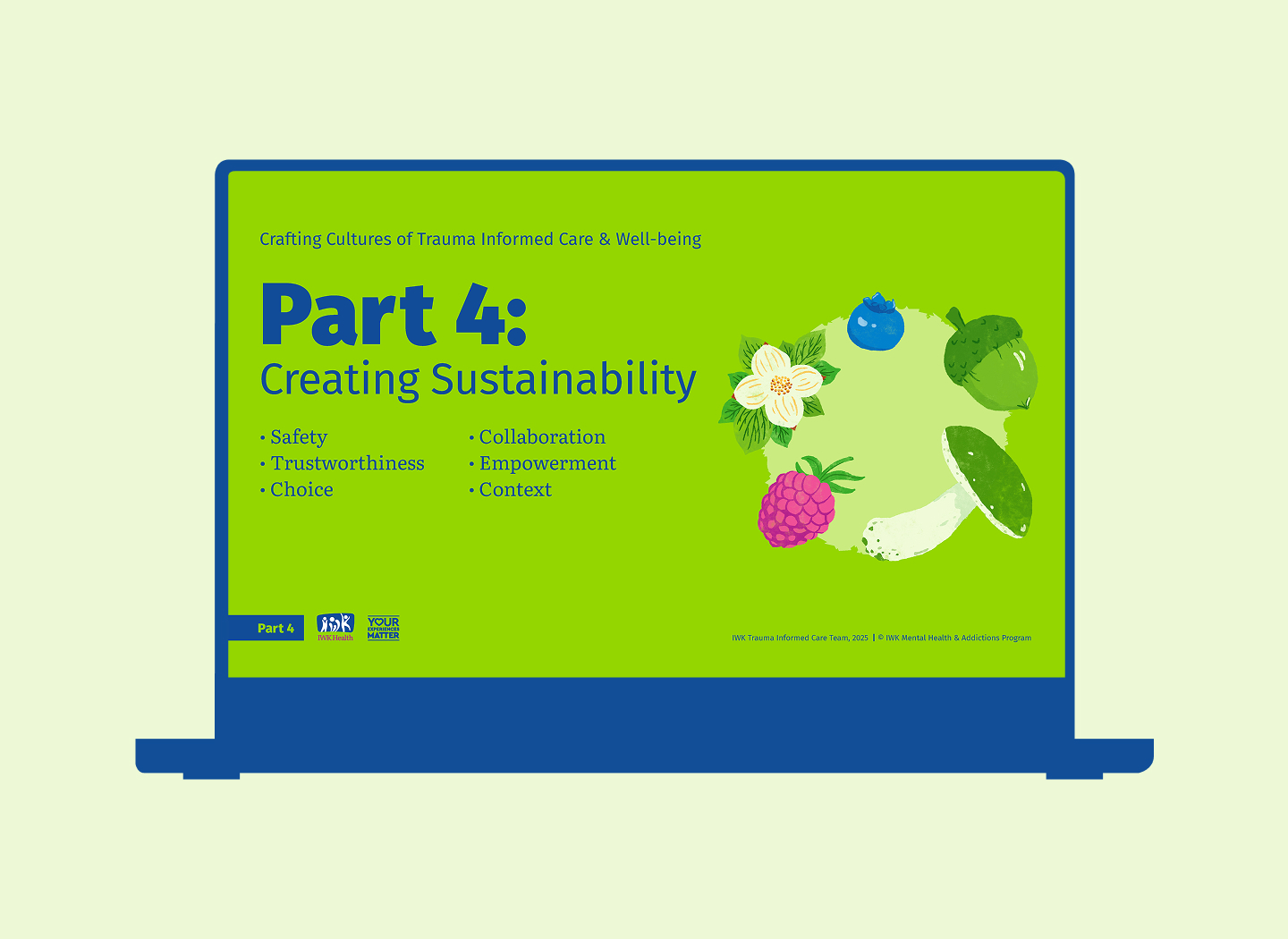
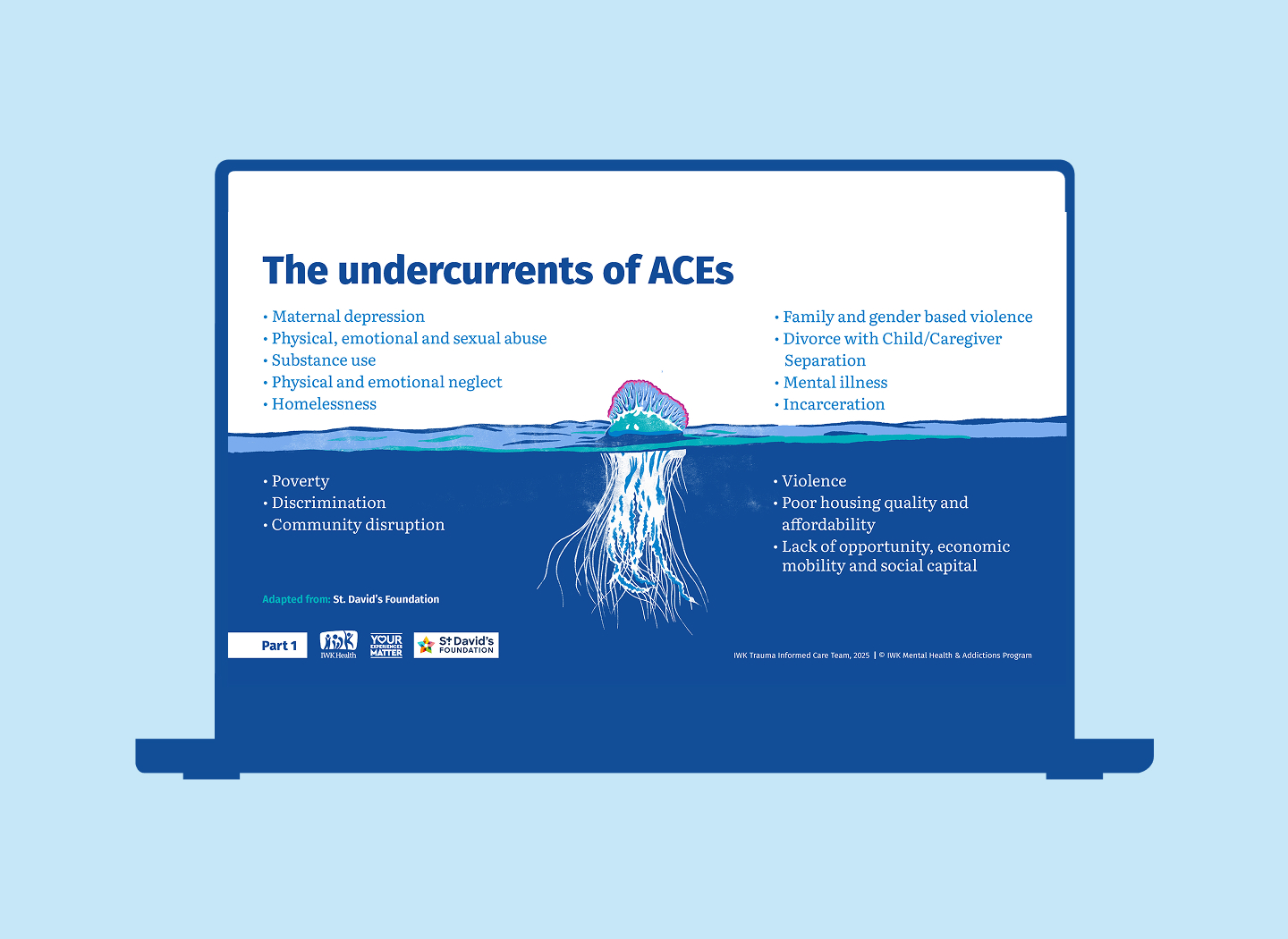
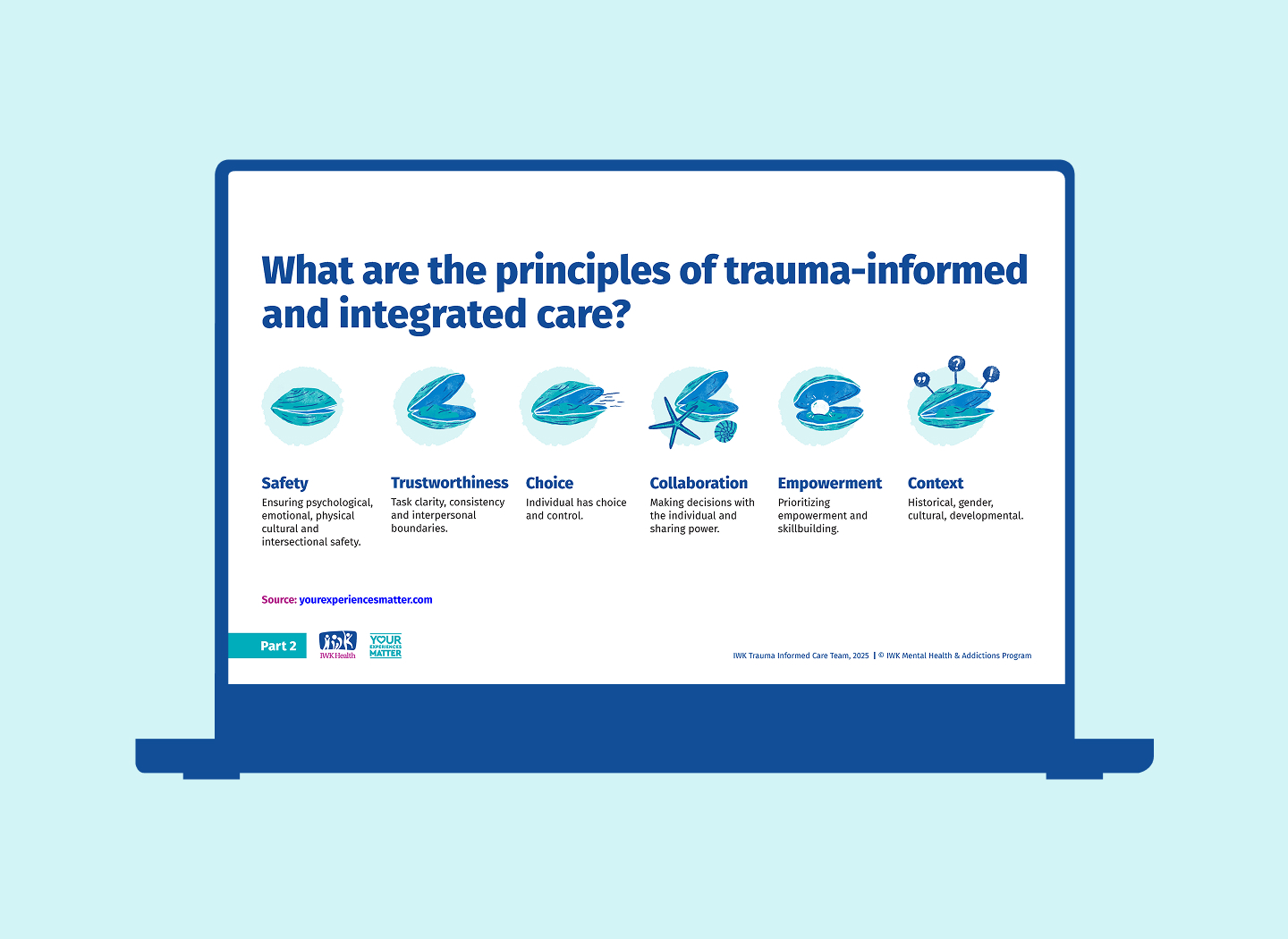
To enhance the user experience, the studio implemented a colour-coordination system to divide training tools, including presentations, manuals, and guidebooks. The team ensured this system remained strictly within the established IWK Health brand guidelines while introducing a unique thematic layer.
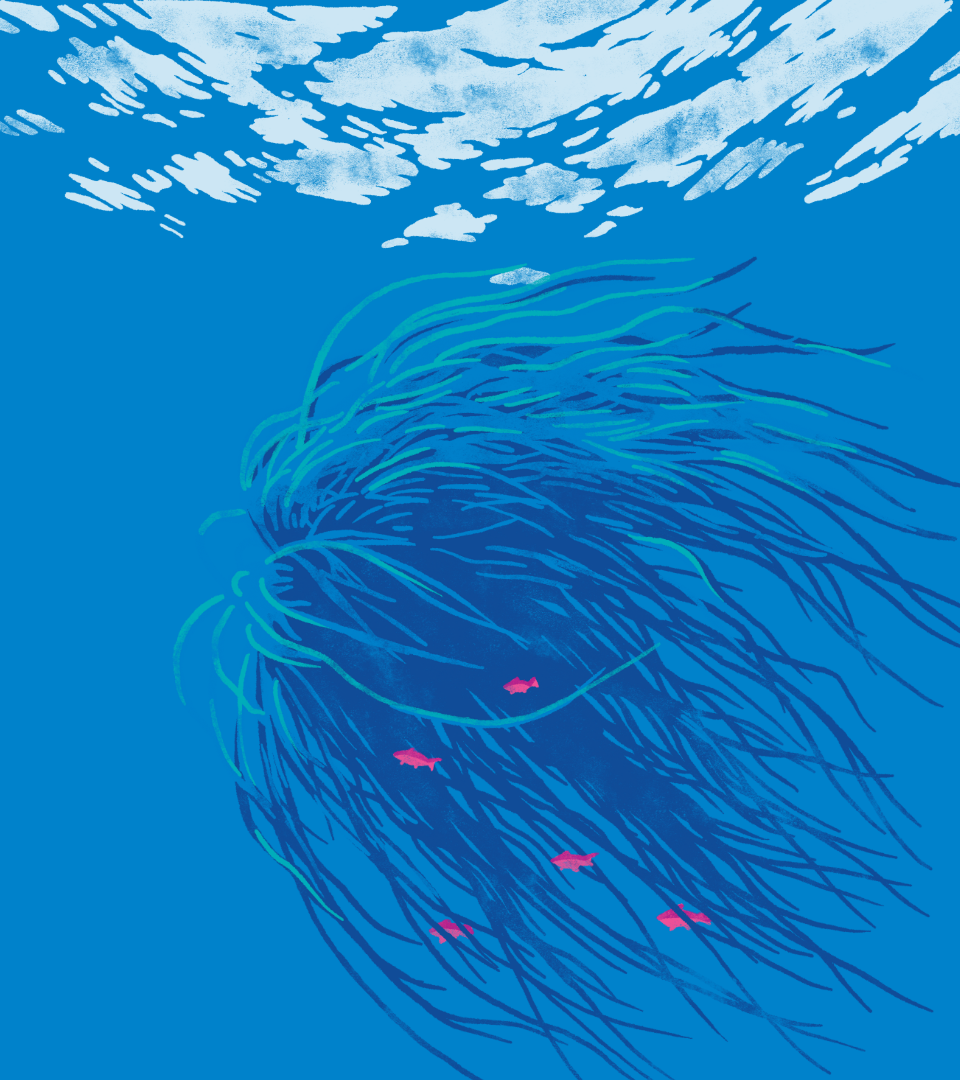
This strategy is inspired by the biodiversity of the Nova Scotia wilderness and moves through multiple ecological elevations. The navigation begins in the open ocean and transitions through riparian zones, fields, and forests before moving above the canopy into the sky. And each colourful chapter represents a clear breakpoint that allows for clean content chunking and effortless user navigation.
Unifying professional perspectives through illustration
A unified illustrative approach was essential to setting an approachable tone for the program. This strategy helps to curate multiple professional perspectives while simultaneously communicating the complexities of TIC. And the resulting visuals reinforce the patient-first mentality that the program strives to achieve.